Nuffield Early Language Intervention improves skills by up to four months

By Nuffield Foundation

An independent evaluation of the Nuffield Early Language Intervention has found that it improves the vocabulary, grammar and listening skills of four- and five-year-olds by as much as four months.

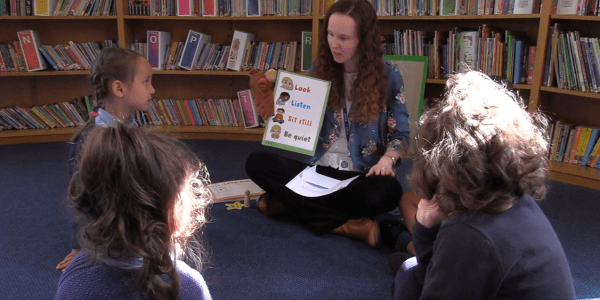
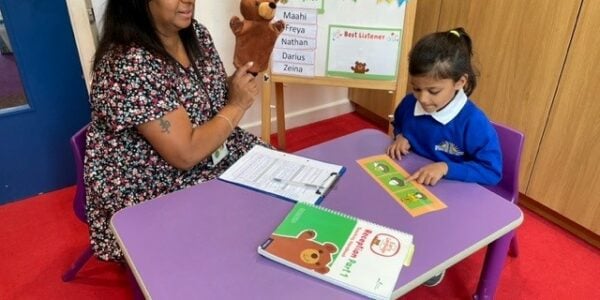
The Nuffield Early Language Intervention is an evidence-based oral language intervention for children in nursery and reception who show weakness in their oral language skills and who are therefore at risk of experiencing difficulty with reading. It is delivered over 20 or 30 weeks by teaching assistants in groups of 3-4 children. It was developed by a team of researchers from the University of York with funding from the Nuffield Foundation and adapted by researchers at University College London.

Positive effect for both 20- and 30-week interventions

The intervention was delivered by the charity I CAN and evaluated by a team from the Institute for Fiscal Studies and NatCen Social Research. The evaluation was funded by the Education Endowment Foundation and tested two versions of the intervention across 34 schools and nurseries: a 30-week programme that started during the final term of nursery and continued during the first two terms of reception year in primary education, and a 20-week programme that ran during the first two terms of primary school.

The evaluation found that the 30-week programme improved the vocabulary, grammar and listening skills of four and five-year olds by as much as four months. The effect of the 20-week version was slightly smaller, but the pupils still experienced the equivalent of about two months’ additional progress.

Methodology

The impact of the Nuffield Early Language Intervention on the language skills of 350 children in 34 schools was tested using a randomised controlled trial design. Schools with attached nursery schools or nursery classes in Yorkshire and the South East were recruited to the trial in 2013. Children identified as having relatively low language skills were randomly allocated to the 30-week programme, the 20-week programme or standard provision. The qualitative fieldwork carried out as part of the project involved interviews with a total of 12 staff in 8 of the 34 participating schools.

Key conclusions

  • The Nuffield Early Language Intervention had a positive impact on the language skills of children in the trial. This is true for both the more expensive, 30-week version, starting in nursery, and the 20-week version, delivered only in school.
  • Children receiving the 30-week version experienced the equivalent of about four months of additional progress, compared with about 2 months additional progress for the 20-week version. Both results are unlikely to have occurred by chance, though results for the 30-week version are more secure.
  • The evaluation did not provide reliable evidence that either version of the programme had a positive impact on children’s word-level literacy skills.
  • Teaching assistants delivering the programme reported that they found it difficult to devote enough time to it, and that support from senior staff was required to protect the programme time.
  • Staff in participating schools reported that the programme had a positive impact on children’s language skills and confidence. They thought that the factors which contributed to this included the small-group format, the activities covered, and the focus on narrative and vocabulary work.
Full findings from the evaluation on the Education Endowment Foundation website

Explore our projects

Over-the-shoulder shot of a female secondary school teacher having a one-to-one conversation with a male teenage student. They are both sitting down and she is maintaining eye contact as she is talking. The teacher is smiling and sharing a positive interaction with the student.
In progress

Education | 2026 - 2028

The impacts of Relational and Restorative Practice in school

View project
Young girl smiling and reading book on green sofa
In progress

Education | 2026 - 2028

Love to Read Phase 2: A large-scale evaluation

View project
In progress

Education | 2026 - 2027

The effects of permanent school closures on pupils’ outcomes

View project
In progress

Education | 2026 - 2028

The long-term impact of student loans in further education

View project
Young woman using a digital printing machine on an apprenticeship
In progress

Education | 2026 - 2027

Apprenticeship Pathways

View project
Early years professionals playing with children
In progress

Education | 2026 - 2028

Noise in early years settings for children from under-privileged backgrounds

View project
Female Student Standing Outside College Building
In progress

Education | 2026 - 2027

How do students with SEND fare in the transition to post-16 education?

View project
Parents with baby
In progress

Education | 2026 - 2028

Your Baby and You: Developing the home learning environment for babies

View project
A cheerful young man wearing a green apron and a grey hoodie. He is placing fresh baked goods outside a cafe, holding a bowl filled with freshly baked bread. The cafe is in the background.
In progress

Education | 2026 - 2027

Student employment and subsequent education and labour market outcomes 

View project
Pioneering study reveals teaching techniques which boost exam performance: a teacher sits on a desk among her secondary school pupils, all looking at the board
In progress

Education | 2026 - 2027

A study of multi-grade teaching in English primary schools

View project
In progress

Education | 2026 - 2027

Education pathways for unaccompanied asylum-seeking children

View project
In progress

Education | 2026 - 2028

School climate and pupil belonging, attendance and achievement

View project
In progress

Education | 2026 - 2027

The effects of permanent school closures on pupils’ outcomes

View project
Female Student Standing Outside College Building
In progress

Education | 2026 - 2027

How do students with SEND fare in the transition to post-16 education?

View project
Young woman using a digital printing machine on an apprenticeship
In progress

Education | 2026 - 2027

Apprenticeship Pathways

View project
Young girl smiling and reading book on green sofa
In progress

Education | 2026 - 2028

Love to Read Phase 2: A large-scale evaluation

View project
Pioneering study reveals teaching techniques which boost exam performance: a teacher sits on a desk among her secondary school pupils, all looking at the board
In progress

Education | 2026 - 2027

A study of multi-grade teaching in English primary schools

View project
Over-the-shoulder shot of a female secondary school teacher having a one-to-one conversation with a male teenage student. They are both sitting down and she is maintaining eye contact as she is talking. The teacher is smiling and sharing a positive interaction with the student.
In progress

Education | 2026 - 2028

The impacts of Relational and Restorative Practice in school

View project
Parents with baby
In progress

Education | 2026 - 2028

Your Baby and You: Developing the home learning environment for babies

View project
In progress

Education | 2026 - 2028

The long-term impact of student loans in further education

View project
In progress

Education | 2026 - 2027

Trialling an assessment protocol for LLM-powered careers advice 

View project
Teaching assistant plays with little boy at nursery
In progress

Education | 2025 - 2026

Room to Grow: School-based Nursery Places and the Disadvantage Gap

View project
In progress

Education | 2026 - 2028

School climate and pupil belonging, attendance and achievement

View project
Early years professionals playing with children
In progress

Education | 2026 - 2028

Noise in early years settings for children from under-privileged backgrounds

View project
In progress

Education | 2026 - 2027

The effects of permanent school closures on pupils’ outcomes

View project
Female Student Standing Outside College Building
In progress

Education | 2026 - 2027

How do students with SEND fare in the transition to post-16 education?

View project
Young woman using a digital printing machine on an apprenticeship
In progress

Education | 2026 - 2027

Apprenticeship Pathways

View project
Young girl smiling and reading book on green sofa
In progress

Education | 2026 - 2028

Love to Read Phase 2: A large-scale evaluation

View project
Pioneering study reveals teaching techniques which boost exam performance: a teacher sits on a desk among her secondary school pupils, all looking at the board
In progress

Education | 2026 - 2027

A study of multi-grade teaching in English primary schools

View project
Over-the-shoulder shot of a female secondary school teacher having a one-to-one conversation with a male teenage student. They are both sitting down and she is maintaining eye contact as she is talking. The teacher is smiling and sharing a positive interaction with the student.
In progress

Education | 2026 - 2028

The impacts of Relational and Restorative Practice in school

View project
Parents with baby
In progress

Education | 2026 - 2028

Your Baby and You: Developing the home learning environment for babies

View project
In progress

Education | 2026 - 2028

The long-term impact of student loans in further education

View project
In progress

Education | 2026 - 2027

Trialling an assessment protocol for LLM-powered careers advice 

View project
Teaching assistant plays with little boy at nursery
In progress

Education | 2025 - 2026

Room to Grow: School-based Nursery Places and the Disadvantage Gap

View project
In progress

Education | 2026 - 2028

School climate and pupil belonging, attendance and achievement

View project
Early years professionals playing with children
In progress

Education | 2026 - 2028

Noise in early years settings for children from under-privileged backgrounds

View project
Reported

Education | 2025 - 2025

Exploring Multi Academy Trust approaches to Artificial Intelligence

View project
Pre-school students sitting in an art classroom being taught by a teacher. The classroom is colourful and the children are sat at a big table.
Reported

Education | 2024 - 2026

A comparative analysis of EY workforce policy in the four UK nations

View project
Young girl using an iPad at home
Reported

Education | 2024 - 2024

Early years digital media literacy review

View project
Secondary school music teacher smiles at students working together at a keyboard.
Reported

Education | 2024 - 2026

Teacher recruitment & retention challenges in England

View project
Sixth form student smiling in a classroom while a teacher helps a classmate in the row behind him
Reported

Education | 2023 - 2025

The Extended Project Qualification: An Opportunity for All?

View project
Teenage sixth form students walking into college
Reported

Education | 2023 - 2025

Revisiting the raising of the participation age to 18 in England

View project
Two little boys and a little girl, all wearing primary school uniform, work together to solve a puzzle in their classroom.
Reported

Education | 2023 - 2025

What has ‘Free School Meals’ measured and what are the implications?

View project
Early years professionals playing with children
Reported

Education | 2022 - 2024

Understanding the take-up of early education entitlements

View project
Male and female apprentices looking at car engine
Reported

Education | 2022 - 2025

Work or study? Gender and the transition from school to work

View project
Two teenage male pupils study a science lesson as part of their post-16 options
Reported

Education | 2019 - 2024

Post-16 pathways: the role of peers, family background and expectations

View project
Teacher helping primary school girl with schoolwork in the classroom
Reported

Education | 2023 - 2024

The impact of additional learning needs identification in Wales

View project
Teenage sixth form students taking notes in a lesson
Reported

Education | 2022 - 2025

Comparing inequality and outcomes across post-16 education in the UK

View project
Search projects

We improve people’s lives by funding research that informs social policy, primarily in Education, Welfare and Justice. We also fund student programmes that give young people skills and confidence in science and research.

We offer our grant-holders the freedom to frame questions and enable new thinking. Our research must stand up to rigorous academic scrutiny, but we understand that to be successful in effecting change, it also needs to be relevant to people’s experience.

Profile