The Nuffield Foundation’s response to the Department for Education’s Advanced British Standard consultation

Nuffield-funded research broadly supports the aspirations of the proposed reforms and identifies potential implementation challenges, says Programme Head, Emily Tanner 

The Government’s proposed Advanced British Standard provides an opportunity to think afresh about how to design a system that supports all young people’s career aspirations, builds the skills and knowledge needed by the changing labour market, and brings England closer to its international counterparts.   

As a longstanding funder of education research in the UK, the Nuffield Foundation has drawn on a wide range of Nuffield-funded evidence in its response to the Advanced British Standard consultation.  In our submission, we consider how the proposals affect young people from diverse backgrounds and the education system pre- and post-16-19 phase.  

Ten key points from our response to the Advanced British Standard consultation

  1. England’s 16-19 qualifications system is narrow compared to other OECD nations and this presents challenges in a labour market which increasingly demands workers with broader technical and essential skills. There is also a specific need for greater capability in numeracy for the data science and AI sectors. Research supports the continuation of Maths in some form to age 18, but alternative pathways tailored to need and ability will be key to maximising student engagement and outcomes.  
  2. Labour market projections indicate most of the growth in occupations in the next decade will be at higher skill levels. The skills most in demand include communication, collaboration, information literacy and problem-solving – making the case for continued study of English in some form in the 16-19 phase. 
  3. The influential Nuffield Review of 14-19 Education and Training and more recent research, support greater alignment between academic and vocational pathways. A unified framework with simplified options at 16 could break down the barriers for students at all attainment levels and may be particularly beneficial for lower attainers. It will be a considerable undertaking to align institutional structures to implement this goal effectively within a context of pressured budgets. It will also lead to further divergence between the UK nations.
  4. The two Level 2 routes proposed recognise that amongst lower attainers, those who have just missed the GCSE thresholds for continuing to Level 3 may be effectively supported to progress through the transition programme. Meanwhile, students who are further below the threshold may benefit from the occupational programme which provides direct support towards employment. Consideration should also be given to how students are supported to prepare for occupational programmes during Key Stage 4. 
  5. The employability, enrichment and pastoral (EEP) element of the ABS should connect explicitly with the existing ecosystem of Gatsby Benchmarks, Careers Hubs and employers working with schools and colleges. They are best placed to design EEP programmes that help young people develop essential skills and connect their learning with the world of work.  
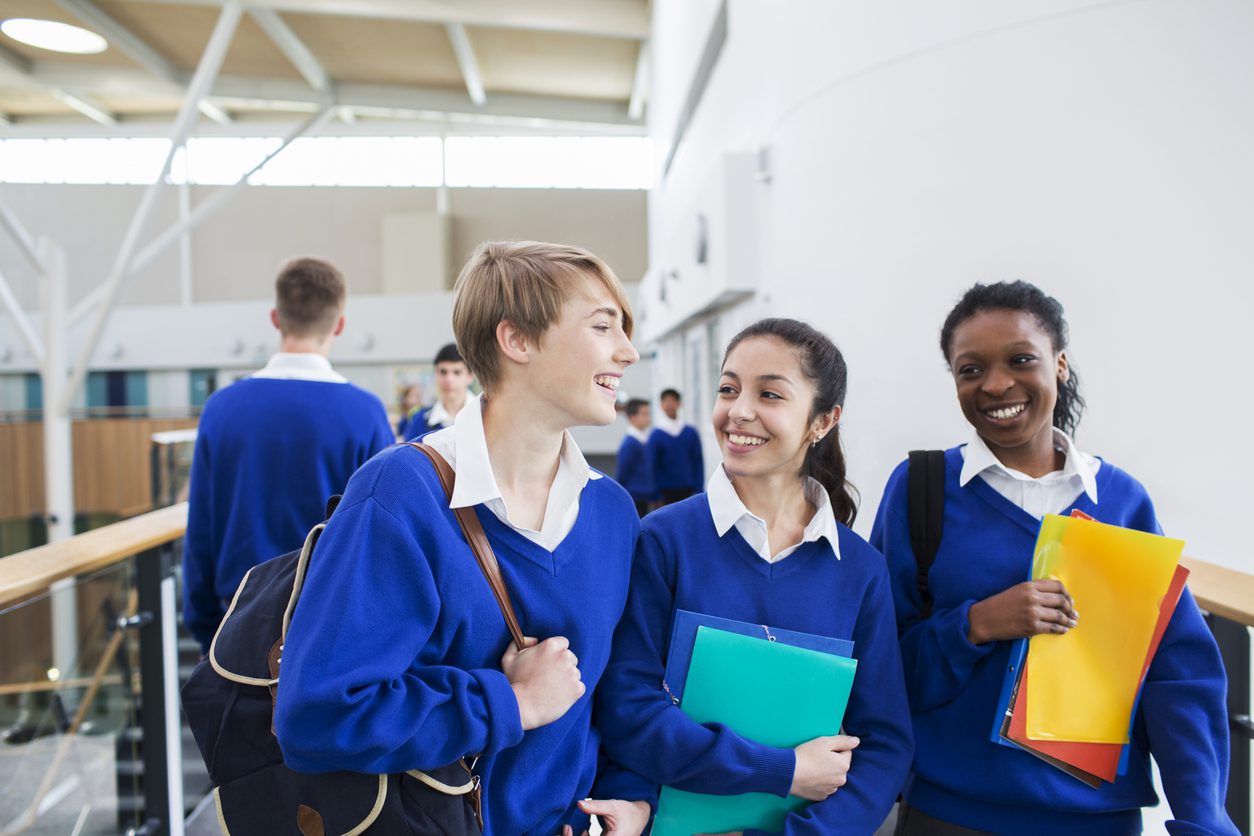
Smiling female students wearing school uniforms walking through school corridor.
  1. Ongoing and chronic issues with teacher recruitment and retention will be a major challenge for scaling up the workforce to implement the ABS. Nuffield-funded research tracks teacher labour market data annually and offers evidence-based solutions rooted in a deep understanding of the profession.  
  2. Access to the ABS requires both renewed efforts to close the disadvantage gap at GCSE and sufficient support to ensure retention on ABS learning pathways. After a decade of disadvantage gaps narrowing they have widened again with the differential impact of learning loss and grading through COVID-19 playing a significant role. Disadvantaged students are further behind at the 16-19 phase, even when controlling for GCSE results. 
  3. Vulnerable groups including those who have been excluded, who have experienced youth custody, who are looked after or care leavers and children with SEND, are likely to benefit from additional career guidance during Key Stage 4. This advice should focus on helping students to make choices about which ABS pathway and subjects to select, and include ongoing support from 16-19 providers to aid retention and achieve a successful outcome. 
  4. The introduction of the ABS provides an opportunity to improve pathways into higher education, higher technical qualifications and apprenticeships. Involving education providers, employers and career guidance professionals in the design will be essential for implementation success. Research on higher education outcomes for BTEC students and access to selective universities according to background offers insights for designing effective approaches. 
  5. Rapid and hard-to-predict developments in AI and associated technologies may have significant implications for the foundational knowledge and skills that young people will need to develop in the 16-19 phase. The curriculum also needs to incorporate education on AI – how best to use it and ensure effective learning from it, how to deal with information overload and misuse, and a more complex and fast-evolving conception of data literacy. This is an area the Nuffield Foundation, with the Ada Lovelace Institute, is actively thinking about. 

Upcoming research will add to the evidence base 

Looking ahead, significant Nuffield-funded work will produce insights relevant to the Advanced British Standard and wider post-16 education policy over the coming year. In Autumn 2024, NFER’s Skills imperative 2035: Essential skills for tomorrow’s workforce propose solutions to the mismatch between skills demand and supply, drawing together the evidence from the first four working papers. At a similar time, the University of Oxford and the Education Policy Institute will conclude their UK comparison of post-16 policy, pathways and outcomes with recommendations for tertiary education policy. This will be followed in 2025 by detailed analyses of specific policies from projects such as Raising the participation age and The long-term impact of the Education maintenance allowance aimed at improving education engagement and outcomes among disadvantaged young people. 


Watch our event on the future of work and skills


The Foundation hosted an event on the changing world of work which provides important context for the ABS reforms. It features presentations from three landmark projects and expert discussion from leading think tanks, policy and business experts.

Explore our projects

Over-the-shoulder shot of a female secondary school teacher having a one-to-one conversation with a male teenage student. They are both sitting down and she is maintaining eye contact as she is talking. The teacher is smiling and sharing a positive interaction with the student.
In progress

Education | 2026 - 2028

The impacts of Relational and Restorative Practice in school

View project
Young girl smiling and reading book on green sofa
In progress

Education | 2026 - 2028

Love to Read Phase 2: A large-scale evaluation

View project

Education | 2026 - 2027

The effects of permanent school closures on pupils’ outcomes

View project
In progress

Education | 2026 - 2028

The long-term impact of student loans in further education

View project
Young woman using a digital printing machine on an apprenticeship

Education | 2026 - 2027

Apprenticeship Pathways

View project
Early years professionals playing with children
In progress

Education | 2026 - 2028

Noise in early years settings for children from under-privileged backgrounds

View project
Female Student Standing Outside College Building

Education | 2026 - 2027

How do students with SEND fare in the transition to post-16 education?

View project
Parents with baby
In progress

Education | 2026 - 2028

Your Baby and You: Developing the home learning environment for babies

View project
A cheerful young man wearing a green apron and a grey hoodie. He is placing fresh baked goods outside a cafe, holding a bowl filled with freshly baked bread. The cafe is in the background.
In progress

Education | 2026 - 2027

Student employment and subsequent education and labour market outcomes 

View project
Pioneering study reveals teaching techniques which boost exam performance: a teacher sits on a desk among her secondary school pupils, all looking at the board
In progress

Education | 2026 - 2027

A study of multi-grade teaching in English primary schools

View project
In progress

Education | 2026 - 2027

Education pathways for unaccompanied asylum-seeking children

View project
In progress

Education | 2026 - 2028

School climate and pupil belonging, attendance and achievement

View project

Education | 2026 - 2027

The effects of permanent school closures on pupils’ outcomes

View project
Female Student Standing Outside College Building

Education | 2026 - 2027

How do students with SEND fare in the transition to post-16 education?

View project
Young woman using a digital printing machine on an apprenticeship

Education | 2026 - 2027

Apprenticeship Pathways

View project
Young girl smiling and reading book on green sofa
In progress

Education | 2026 - 2028

Love to Read Phase 2: A large-scale evaluation

View project
Pioneering study reveals teaching techniques which boost exam performance: a teacher sits on a desk among her secondary school pupils, all looking at the board
In progress

Education | 2026 - 2027

A study of multi-grade teaching in English primary schools

View project
Over-the-shoulder shot of a female secondary school teacher having a one-to-one conversation with a male teenage student. They are both sitting down and she is maintaining eye contact as she is talking. The teacher is smiling and sharing a positive interaction with the student.
In progress

Education | 2026 - 2028

The impacts of Relational and Restorative Practice in school

View project
Parents with baby
In progress

Education | 2026 - 2028

Your Baby and You: Developing the home learning environment for babies

View project
In progress

Education | 2026 - 2028

The long-term impact of student loans in further education

View project
In progress

Education | 2026 - 2027

Trialling an assessment protocol for LLM-powered careers advice 

View project
Teaching assistant plays with little boy at nursery
In progress

Education | 2025 - 2026

Room to Grow: School-based Nursery Places and the Disadvantage Gap

View project
In progress

Education | 2026 - 2028

School climate and pupil belonging, attendance and achievement

View project
Early years professionals playing with children
In progress

Education | 2026 - 2028

Noise in early years settings for children from under-privileged backgrounds

View project
Young girl smiling and reading book on green sofa
In progress

Education | 2026 - 2028

Love to Read Phase 2: A large-scale evaluation

View project
Pioneering study reveals teaching techniques which boost exam performance: a teacher sits on a desk among her secondary school pupils, all looking at the board
In progress

Education | 2026 - 2027

A study of multi-grade teaching in English primary schools

View project
Over-the-shoulder shot of a female secondary school teacher having a one-to-one conversation with a male teenage student. They are both sitting down and she is maintaining eye contact as she is talking. The teacher is smiling and sharing a positive interaction with the student.
In progress

Education | 2026 - 2028

The impacts of Relational and Restorative Practice in school

View project
Parents with baby
In progress

Education | 2026 - 2028

Your Baby and You: Developing the home learning environment for babies

View project
In progress

Education | 2026 - 2028

The long-term impact of student loans in further education

View project
In progress

Education | 2026 - 2027

Trialling an assessment protocol for LLM-powered careers advice 

View project
Teaching assistant plays with little boy at nursery
In progress

Education | 2025 - 2026

Room to Grow: School-based Nursery Places and the Disadvantage Gap

View project
In progress

Education | 2026 - 2028

School climate and pupil belonging, attendance and achievement

View project
Early years professionals playing with children
In progress

Education | 2026 - 2028

Noise in early years settings for children from under-privileged backgrounds

View project
In progress

Education | 2025 - 2026

Childminder-led structured language enrichment in the Early Years

View project
A horizontal image of two children outdoors using a big mental pan to make mud pies, while a young woman supervises. The children are both wrapped up warm in coats and are contently playing
In progress

Education | 2025 - 2028

Policy change and inequalities in early childhood education and care

View project
A cheerful young man wearing a green apron and a grey hoodie. He is placing fresh baked goods outside a cafe, holding a bowl filled with freshly baked bread. The cafe is in the background.
In progress

Education | 2026 - 2027

Student employment and subsequent education and labour market outcomes 

View project
New

Education | 2025 - 2025

Exploring Multi Academy Trust approaches to Artificial Intelligence

View project
SEND pupil drawing in classroom
New

Education | 2025 - 2026

The uneven distribution of pupils with SEND in mainstream schools

View project
Elevated view of students sitting and learning in computer room
New

Education | 2025 - 2027

Improving wellbeing-focused online media literacy in schools

View project
Young girl using an iPad at home
New

Education | 2024 - 2024

Early years digital media literacy review

View project
New

Welfare | 2024 - 2027

Gypsy, Roma, Traveller Youth: mitigating exclusions using the digital?

View project
New

Education | 2024 - 2026

Spending across different stages of education

View project
Teenager hugging their mother
New

Welfare | 2023 - 2026

Juvenile onset rheumatic diseases: education, vocational readiness, & employment

View project
Pre-school students sitting in an art classroom being taught by a teacher. The classroom is colourful and the children are sat at a big table.
Reported

Education | 2024 - 2026

A comparative analysis of EY workforce policy in the four UK nations

View project
Sixth form student smiling in a classroom while a teacher helps a classmate in the row behind him
Reported

Education | 2023 - 2025

The Extended Project Qualification: An Opportunity for All?

View project
Two little boys and a little girl, all wearing primary school uniform, work together to solve a puzzle in their classroom.
Reported

Education | 2023 - 2025

What has ‘Free School Meals’ measured and what are the implications?

View project
Male and female apprentices looking at car engine
Reported

Education | 2022 - 2025

Work or study? Gender and the transition from school to work

View project
Teenage sixth form students taking notes in a lesson
Reported

Education | 2022 - 2025

Comparing inequality and outcomes across post-16 education in the UK

View project
Little girl watches TV on her own at home
Reported

Education | 2023 - 2025

Do same language subtitles help children learn to read?

View project
Reception class children using a parachute in a PE lesson
Reported

Education | 2022 - 2023

A movement and story-telling intervention for reception children

View project
Reported

Education | Welfare | 2022 - 2024

Understanding school attendance, education and labour market outcomes

View project
A classroom of children with their hands up to answer a question, with two teachers at the front of the classroom
Reported

Education | 2022 - 2024

Inspecting the inspectorate: new insights into Ofsted inspections

View project
Reported

Education | 2022 - 2025

The medium-term impact of the COVID-19 pandemic on pupils with SEND

View project
Side view of two female high school students in classroom working on laptops social distancing. Student in foreground is in focus and student in background is blurred
Reported

Education | 2021 - 2022

COVID-19 and disadvantage gaps in England 2020 and 2021

View project
Young boy draws and plays with a globe as part of nursery education
Reported

Education | 2020 - 2022

COVID-19 and childcare: local impacts across England

View project
Search projects

We improve people’s lives by funding research that informs social policy, primarily in Education, Welfare and Justice. We also fund student programmes that give young people skills and confidence in science and research.

We offer our grant-holders the freedom to frame questions and enable new thinking. Our research must stand up to rigorous academic scrutiny, but we understand that to be successful in effecting change, it also needs to be relevant to people’s experience.

Profile