-
Dr Kirsten Abbot-SmithUniversity of Kent
-
Dr Alexandra SturrockUniversity of Manchester
-
Professor Danielle MatthewsThe University of Sheffield
-
Dr Colin BannardUniversity of Manchester
-
Professor Julie DockrellUCL Institute of Education
Project overview
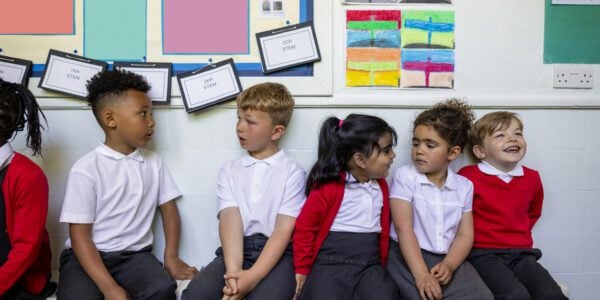
This project sought to co-develop and assess the feasibility and acceptability of a school-based programme to improve social conversation skills in primary classrooms.
Why this research is important
Conversation skills are central to forming and sustaining peer relationships and for collaborative school tasks. Children’s skills vary widely and are associated with academic, social, behavioural and mental health outcomes. Teaching conversation skills is a statutory requirement in the English primary spoken curriculum.
However, no evidence-based programmes support teachers to scaffold conversation skills in classroom contexts.
How the intervention was developed
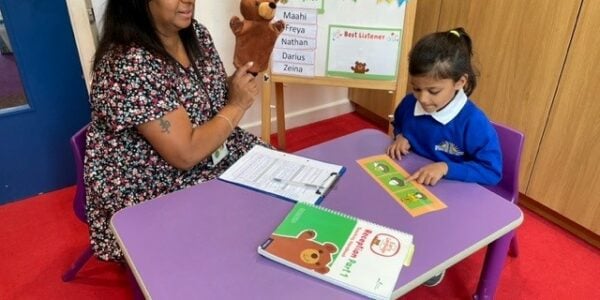
The Conversation for Social Interaction (CoSI) programme was co-developed with teachers. It combines explicit instruction and structured interactive activities to support conversation skills. Opportunities for unstructured peer-to-peer practice, supported by teacher feedback to encourage skill generalisation, are embedded throughout.
To support evaluation, 72 children were tested to evaluate the inter-rater and test-retest reliability of measures to directly assess children’s conversational ability.
A 12-week version of the CoSI programme was then implemented and evaluated in six schools.
Key findings
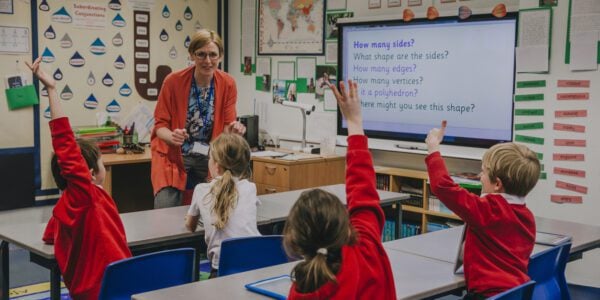
Teacher perspectives were gathered through interviews with participating staff and focus groups with additional primary teachers. All six schools delivered the programme. Teachers reported that the structured lessons and activities were engaging, well-designed, and typically incorporated peer-to-peer practice.
118 pupils were assessed across the six schools. Comparing pre- and post- COSI delivery, children showed statistically significant improvements in relevant responding and aspects of turn-taking, with medium effect sizes. Most pupils reported real-life benefits (87%). Teachers also described positive impacts for pupils and emphasised the importance of conversational skills for group work across the curriculum and for managing peer disagreements.
Implications
Qualitative findings highlighted the need for further co-development to refine strategies for managing noise levels and to strengthen teacher confidence in facilitating unstructured peer conversation within lesson time.
Teachers highlighted an increasing need for structured support for social communication in primary classrooms. This speaks to a need to develop children’s conversations skills within classroom contexts and links to findings from the 2025 Curriculum and Assessment Review which presented evidence that “attention to oracy is insufficient” and highlighted “the need to make speaking and listening requirements more prominent”.
The findings therefore make a case for the further development of the CoSI programme as a timely response to both classroom realities and a future-ready national curriculum.