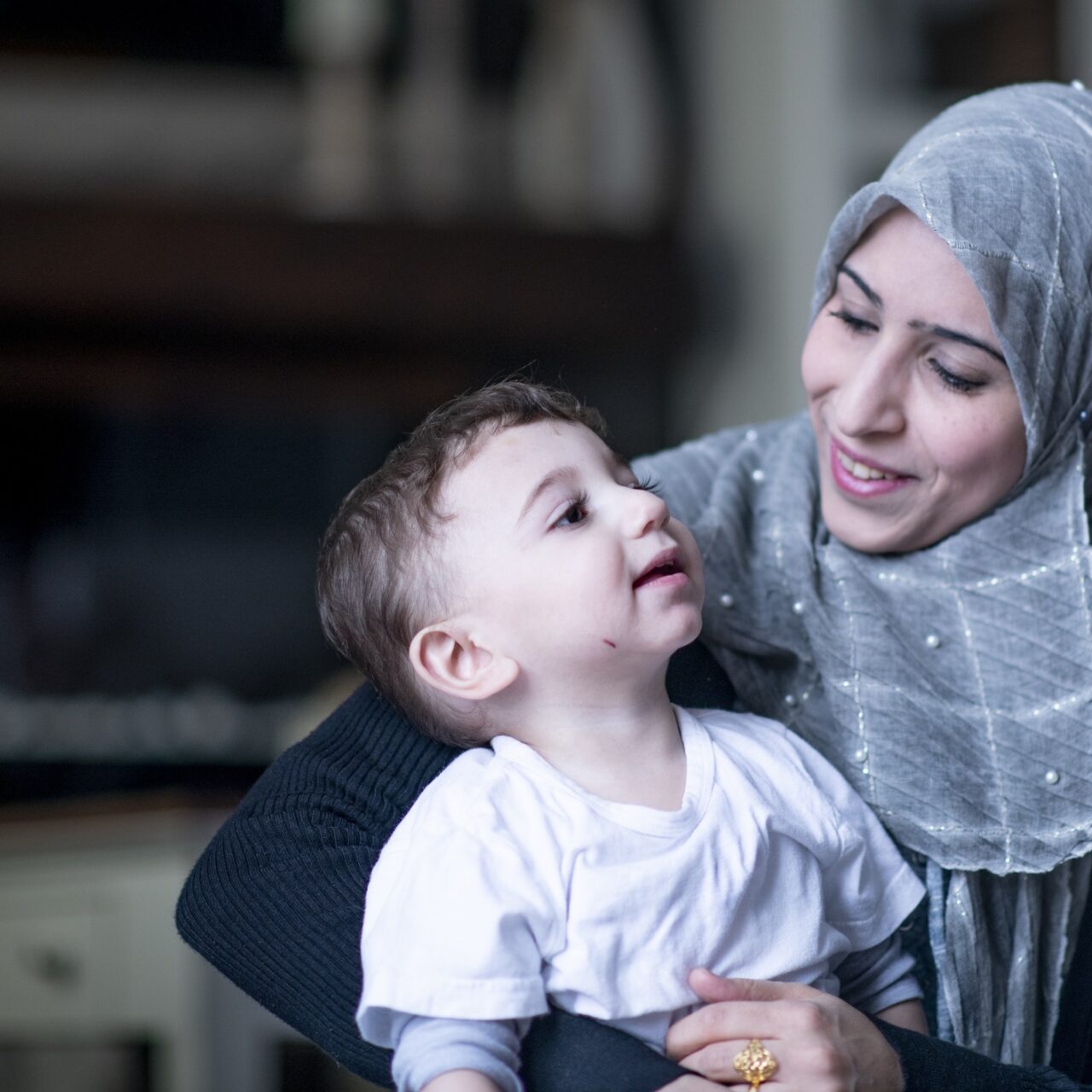
Worried parents are restricting children’s freedom

By Nuffield Foundation

New research has revealed that parents in England are more restrictive than in other European countries, granting their children less freedom for travel and unaccompanied neighbourhood play.

The research, by Policy Studies Institute and funded by the Nuffield Foundation, compares children’s independent mobility in 16 countries around the world based on a survey of over 18,000 children aged seven to 15 from 2010-2012. The study found that children’s independent mobility – their ability to travel and play in their local area unsupervised by adults – varies widely across the 16 countries. Significant restrictions are placed on children in nearly all the countries surveyed with the research revealing that fear of traffic was the biggest factor influencing their decision.

England’s aggregate rank placed it in seventh place behind top-performing countries including Finland and Germany. Overall, Finnish parents allowed their children more freedom for almost every independent mobility indicator in this study. The degree of independent mobility granted to children in Finland is striking, with a majority of children aged eight allowed to cross main roads, travel home from school and go out after dark alone.

Going out alone after dark is the most withheld indicator of independent mobility. Children of any age are allowed to go out after dark in only a handful of countries – Finland, Sweden, Japan and Denmark.

England needs to develop its policies in order to improve children’s independent mobility, with the report outlining seven recommendations on how to achieve this. These include reducing car dependency and adopting Daylight Saving Time to allow children to utilise daylight hours and reducing road casualties. Previous work by PSI in this area of social policy has highlighted a continuing sharp decline in independent mobility with significant impacts on child development.

Allowing children the freedom to get about in their local area unaccompanied by adults has been found to be important for their health and physical, mental and social development. Yet we have found that children around the world have significant restrictions placed on their freedom to get about – to go to school, to visit friends, and get to places to play.” Ben Shaw, Director of Policy Studies Institute

He continued: “Children’s freedom of movement has declined in recent decades and danger from traffic is the main reason parents give for not letting their children out by themselves. We are struck by how this significant danger and major restriction on children, is routinely accepted given the health and developmental benefits independent mobility has been shown to result in.

“While restrictions on children’s freedom have increased, our research has looked at how this situation can be turned around. We have found some shining examples of cities such as Rotterdam and Vancouver which have been inspired to place children at the centre of their development, on the basis that if a city works for children it works for everyone. However, if the benefits of these approaches are to be enjoyed in the UK, the needs of children must be given much greater priority by decision makers working in the policy areas of planning, development and transport.”

Related


Explore our projects

A portrait of a teenager wearing casual clothing on an overcast summer day in Whitley Bay, Northeastern England. They are standing and looking concerned as they use their smartphone.
In progress

Welfare | 2026 - 2028

The digital lives of care-experienced children

View project
A simple wall sign outside the British Treasury building at 1 Horse Guards Road, just off Whitehall, London.
In progress

Welfare | 2026 - 2030

IFS Green Budget 2026 – 2029

View project
Young well dressed businesswoman working on a computer at the office

Welfare | 2026 - 2029

Pain-at-Work Toolkit for employees with chronic pain (definitive trial) 

View project

Welfare | 2026 - 2028

Examining gender pension gaps: trajectories over time in the UK

View project
Teenage boy looking out of window
New

Justice | 2026 - 2028

Permanently Progressing Phase 3: Adolescence and early adulthood

View project
Houses along a street in the UK

Welfare | 2026 - 2028

Towards housing affordability: local supply drivers and optimal policy

View project
In progress

Racial Diversity UK | Welfare | 2026 - 2027

Racial equality since devolution: Divergences, outcomes and frontiers

View project
voters entering polling station to vote in election

Welfare | 2025 - 2026

Tax, benefits and public spending in the 2026 devolved elections

View project

Welfare | 2025 - 2026

2026 Scottish Parliament and Senedd election analysis

View project
A shot of a grandfather sitting in a tractor with his young granddaughter, he is at his farm in North East, England. The grandfather and the girl's mother are teaching her about the farm.
In progress

Welfare | 2025 - 2028

Arthritis and farmers in England: Impacts, adaptations and prevention

View project
row of houses
In progress

Welfare | 2025 - 2028

Musculoskeletal conditions in underserved communities

View project

Welfare | 2025 - 2028

Inequalities and the future

View project
Teenage boy looking out of window
New

Justice | 2026 - 2028

Permanently Progressing Phase 3: Adolescence and early adulthood

View project
A simple wall sign outside the British Treasury building at 1 Horse Guards Road, just off Whitehall, London.
In progress

Welfare | 2026 - 2030

IFS Green Budget 2026 – 2029

View project
A portrait of a teenager wearing casual clothing on an overcast summer day in Whitley Bay, Northeastern England. They are standing and looking concerned as they use their smartphone.
In progress

Welfare | 2026 - 2028

The digital lives of care-experienced children

View project
Young well dressed businesswoman working on a computer at the office

Welfare | 2026 - 2029

Pain-at-Work Toolkit for employees with chronic pain (definitive trial) 

View project

Welfare | 2025 - 2026

2026 Scottish Parliament and Senedd election analysis

View project
Houses along a street in the UK

Welfare | 2026 - 2028

Towards housing affordability: local supply drivers and optimal policy

View project

Welfare | 2026 - 2028

Examining gender pension gaps: trajectories over time in the UK

View project
voters entering polling station to vote in election

Welfare | 2025 - 2026

Tax, benefits and public spending in the 2026 devolved elections

View project

Welfare | 2025 - 2028

Actionable insights to tackle UK dietary inequalities

View project
A mid-level street view of an older brick social housing block. To the left is a large green tree.

Welfare | 2025 - 2026

Navigating social housing tenancies: Language and cultural barriers

View project
A heavily pregnant mother working at home on her laptop while talking to her kids as they stand near her.

Welfare | 2025 - 2028

Effective hybrid work: Childcare, work-life balance and well-being

View project

Welfare | 2025 - 2028

Inequalities and the future

View project
Teenage boy looking out of window
New

Justice | 2026 - 2028

Permanently Progressing Phase 3: Adolescence and early adulthood

View project
A simple wall sign outside the British Treasury building at 1 Horse Guards Road, just off Whitehall, London.
In progress

Welfare | 2026 - 2030

IFS Green Budget 2026 – 2029

View project
A portrait of a teenager wearing casual clothing on an overcast summer day in Whitley Bay, Northeastern England. They are standing and looking concerned as they use their smartphone.
In progress

Welfare | 2026 - 2028

The digital lives of care-experienced children

View project
In progress

Education | 2025 - 2028

SleepBoost: The feasibility of supporting sleep to support language

View project
In progress

Racial Diversity UK | Welfare | 2026 - 2027

Racial equality since devolution: Divergences, outcomes and frontiers

View project
In progress

Racial Diversity UK | Welfare | 2025 - 2028

Decline to renewal: Race, deindustrialisation and working lives

View project
In progress

Racial Diversity UK | Welfare | 2025 - 2028

Better mixing: Supporting Scotland’s diverse future

View project
In progress

Racial Diversity UK | Welfare | 2025 - 2028

Voices for equity: Moving from evidence to action

View project
Two mothers cuddle their daughter on the sofa with their dog: Welfare access, assets and debts of LGBT+ people in the UK
In progress

Welfare | 2025 - 2027

Understanding fertility intentions in 21st century Britain

View project
In progress

Welfare | 2025 - 2027

Musculoskeletal conditions, employment retention and job quality

View project
lady looking out of the bus window
In progress

Welfare | 2025 - 2028

Economic inactivity, arthritis & depression: who, why & how to respond

View project
row of houses
In progress

Welfare | 2025 - 2028

Musculoskeletal conditions in underserved communities

View project
Black woman typing on laptop in living room
Reported

Welfare | 2024 - 2025

Enhancing, localising and democratising tax-benefit policy analysis

View project
A middle-aged man sat at home is looking at this phone while sorting pension paperwork.
Reported

Welfare | 2023 - 2025

Collective defined contribution pensions with investment choice

View project
Elderly man drinking tea at home with professional carer
Reported

Welfare | 2023 - 2024

Evidencing the outsourcing of social care provision in England

View project
Older woman using a tablet to make a video call
Reported

Welfare | 2023 - 2025

Remote osteoarthritis peer-mentorship for socioeconomically underserved people

View project
Reported

Education | Welfare | 2022 - 2024

Understanding school attendance, education and labour market outcomes

View project
Grandparents having fun outdoors with their granddaughter, who is eating an apple and laughing: Understanding family and community vulnerabilities in transition to net zero
Reported

Welfare | 2021 - 2023

Understanding family and community vulnerabilities in transition to net zero

View project
Father and son using laptop at home
Reported

Welfare | 2021 - 2025

Developing a minimum digital living standard for households with children

View project
Code encounters algorithmic risk-profiling in housing: a family in their kitchen at home
Reported

Welfare | 2022 - 2024

Code encounters: algorithmic risk-profiling in housing

View project
Long-term outcomes for care-experienced parents and children: a father comes into the kitchen carrying a cup of tea. Two children are standing in the kitchen with their mother, who is holding and feeding the baby
Reported

Justice | 2021 - 2026

Long-term outcomes for care-experienced parents and children

View project
The future of work and wellbeing. A man working from home during the COVID-19 crisis, having a video meeting with colleagues
Reported

Welfare | 2021 - 2024

The Future of Work and Well-being: The Pissarides Review

View project
Close up of a young girl and her father wearing protective face masks during the COVID-19 pandemic outside.
Reported

Welfare | 2021 - 2023

The Economy 2030 Inquiry: navigating a decade of change

View project
Reported

Justice | 2020 - 2022

When is a wedding not a marriage? Exploring non-legally binding ceremonies

View project
Search projects

We improve people’s lives by funding research that informs social policy, primarily in Education, Welfare and Justice. We also fund student programmes that give young people skills and confidence in science and research.

We offer our grant-holders the freedom to frame questions and enable new thinking. Our research must stand up to rigorous academic scrutiny, but we understand that to be successful in effecting change, it also needs to be relevant to people’s experience.

Profile