Migration has changed the size and shape of the UK’s workforce but economic impact of new migration regime is overdone by opponents and supporters

By Nuffield Foundation

Migration has altered the size and shape of the UK labour market in recent decades, but the move to a more restrictive regime since leaving the European Union won’t drive the ‘high wage‘ economy that the Prime Minister has claimed it will, according to new Resolution Foundation research.

Under new management – a report for The Economy 2030 Inquiry, a collaboration with the LSE, funded by the Nuffield Foundation – examines how the UK’s migration regime has affected the labour force in the past, and what the new regime, which restricts work-related immigration to those with higher-wage jobs, will mean for Britain’s workforce.

The expectation that restricting freedom of movement will drive change in the labour market is well-founded, says the author, as immigration has significantly altered the size and composition of the UK labour force over the past two decades.

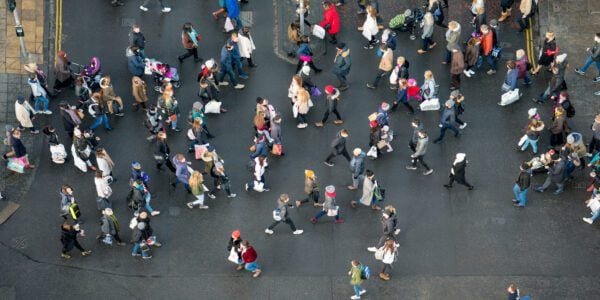
Between 1994 and 2019, the UK labour force grew by 18% (4.9 million), with migrants comprising over three-quarters (77%) of this growth, and EU workers alone accounting for over a third (34%) of total labour force growth.

Over this period, EU migrants have become increasingly over-represented in lower-paid occupations – in part reflecting the accession of eight eastern European countries to the EU in 2004.

In 2000 both EU and non-EU migrants were more likely than UK-born workers to work in high-skilled managerial and professional roles (by 6 and 8 percentage points respectively). By 2019 however, EU workers were significantly more likely than UK-born workers to work in low-paid jobs such as plant operatives (6 percentage points) or elementary roles (9 percentage points).

The report notes that the new migration regime will mean significant change for some lower-paying industries which rely on migrant labour and typically see high staff turnover – such as food manufacturing, warehousing and accommodation – with many of their roles excluded from the new ‘skilled worker visa’.

For example, one-in-five workers (20%) in food manufacturing in 2017-19 were from the EU and would be ineligible for a skilled worker visa, meaning the sector is likely to need to change significantly or shrink in the years ahead. The food and accommodation sectors who rely on EU-workers in skilled worker visa-ineligible roles for 10% of their workforce have seen vacancies double as the economy reopened.

But despite past evidence showing that migration has a positive impact on firm-level productivity, the report argues that the impact of the new migration regime on the economy as a whole is likely to be small.

The Prime Minister’s claims that controlled migration is the key to a new high wage economic strategy are overdone. While the shrinking of low-productivity, migrant-reliant sectors like farming and food manufacturing could boost average productivity, the new regime is unlikely to have a big impact on the UK’s economy-wide productivity problem, as there is no strong relationship between changes in the share of workers that are migrants across countries and productivity growth.

Lower migration will also not deliver a big hit to the public finances that opponents of lower migration often warn of. Although the Office for Budget Responsibility find that the new migration regime could result in £2 billion savings to the public finances by 2024-25, this figure is small in comparison to other expenditures, like the £8.7 billion on COVID-19 related personal protective equipment (PPE) that the Department for Health and Social Care recently reported writing off.

Kathleen Henehan, Senior Research and Policy Analyst at the Resolution Foundation, said:

“Despite claims from both sides of the debate, the UK’s new migration regime will do little to change the UK’s economic trajectory, or its central low investment, low productivity challenges.

“Over the past two decades, immigration has had a profound effect on the size and composition of the UK’s labour force, with migrants driving over three-quarters of the growth in the workforce.

“And sectors which are particularly reliant on migrant workers – such as food manufacturing, warehousing and accommodation – are more exposed to the regime changes, which will limit firms’ abilities to hire low-paid non-UK workers in these industries and to respond quickly to changes in demand.

“But evidence does not suggest that the coming change in the level and nature of migration will transform our economy, or our public finances.”

“Ultimately, a migration strategy is not a substitute for an economic strategy.”

Related project


Explore our projects

A portrait of a teenager wearing casual clothing on an overcast summer day in Whitley Bay, Northeastern England. They are standing and looking concerned as they use their smartphone.
In progress

Welfare | 2026 - 2028

The digital lives of care-experienced children

View project
A simple wall sign outside the British Treasury building at 1 Horse Guards Road, just off Whitehall, London.
In progress

Welfare | 2026 - 2030

IFS Green Budget 2026 – 2029

View project
In progress

Education | 2026 - 2028

The long-term impact of student loans in further education

View project
Young well dressed businesswoman working on a computer at the office

Welfare | 2026 - 2029

Pain-at-Work Toolkit for employees with chronic pain (definitive trial) 

View project
Young woman using a digital printing machine on an apprenticeship
In progress

Education | 2026 - 2027

Apprenticeship Pathways

View project

Welfare | 2026 - 2028

Examining gender pension gaps: trajectories over time in the UK

View project
A cheerful young man wearing a green apron and a grey hoodie. He is placing fresh baked goods outside a cafe, holding a bowl filled with freshly baked bread. The cafe is in the background.
In progress

Education | 2026 - 2027

Student employment and subsequent education and labour market outcomes 

View project
Houses along a street in the UK

Welfare | 2026 - 2028

Towards housing affordability: local supply drivers and optimal policy

View project
In progress

Racial Diversity UK | Welfare | 2026 - 2027

Racial equality since devolution: Divergences, outcomes and frontiers

View project
voters entering polling station to vote in election

Welfare | 2025 - 2026

Tax, benefits and public spending in the 2026 devolved elections

View project

Welfare | 2025 - 2026

2026 Scottish Parliament and Senedd election analysis

View project
A shot of a grandfather sitting in a tractor with his young granddaughter, he is at his farm in North East, England. The grandfather and the girl's mother are teaching her about the farm.
In progress

Welfare | 2025 - 2028

Arthritis and farmers in England: Impacts, adaptations and prevention

View project
A simple wall sign outside the British Treasury building at 1 Horse Guards Road, just off Whitehall, London.
In progress

Welfare | 2026 - 2030

IFS Green Budget 2026 – 2029

View project
A portrait of a teenager wearing casual clothing on an overcast summer day in Whitley Bay, Northeastern England. They are standing and looking concerned as they use their smartphone.
In progress

Welfare | 2026 - 2028

The digital lives of care-experienced children

View project
Young well dressed businesswoman working on a computer at the office

Welfare | 2026 - 2029

Pain-at-Work Toolkit for employees with chronic pain (definitive trial) 

View project
Young woman using a digital printing machine on an apprenticeship
In progress

Education | 2026 - 2027

Apprenticeship Pathways

View project
In progress

Education | 2026 - 2028

The long-term impact of student loans in further education

View project

Welfare | 2025 - 2026

2026 Scottish Parliament and Senedd election analysis

View project
Houses along a street in the UK

Welfare | 2026 - 2028

Towards housing affordability: local supply drivers and optimal policy

View project

Welfare | 2026 - 2028

Examining gender pension gaps: trajectories over time in the UK

View project
voters entering polling station to vote in election

Welfare | 2025 - 2026

Tax, benefits and public spending in the 2026 devolved elections

View project

Welfare | 2025 - 2028

Actionable insights to tackle UK dietary inequalities

View project
A mid-level street view of an older brick social housing block. To the left is a large green tree.

Welfare | 2025 - 2026

Navigating social housing tenancies: Language and cultural barriers

View project
A cheerful young man wearing a green apron and a grey hoodie. He is placing fresh baked goods outside a cafe, holding a bowl filled with freshly baked bread. The cafe is in the background.
In progress

Education | 2026 - 2027

Student employment and subsequent education and labour market outcomes 

View project
A simple wall sign outside the British Treasury building at 1 Horse Guards Road, just off Whitehall, London.
In progress

Welfare | 2026 - 2030

IFS Green Budget 2026 – 2029

View project
A portrait of a teenager wearing casual clothing on an overcast summer day in Whitley Bay, Northeastern England. They are standing and looking concerned as they use their smartphone.
In progress

Welfare | 2026 - 2028

The digital lives of care-experienced children

View project
Young woman using a digital printing machine on an apprenticeship
In progress

Education | 2026 - 2027

Apprenticeship Pathways

View project
In progress

Education | 2026 - 2028

The long-term impact of student loans in further education

View project
A cheerful young man wearing a green apron and a grey hoodie. He is placing fresh baked goods outside a cafe, holding a bowl filled with freshly baked bread. The cafe is in the background.
In progress

Education | 2026 - 2027

Student employment and subsequent education and labour market outcomes 

View project
Kid playing with wood toys at pre school classroom.
In progress

Education | 2025 - 2027

What price is free? The price effects of England’s childcare reforms

View project
In progress

Education | 2025 - 2027

Racial inequalities in access to professional careers – what matters?

View project
In progress

Racial Diversity UK | Welfare | 2026 - 2027

Racial equality since devolution: Divergences, outcomes and frontiers

View project
In progress

Racial Diversity UK | Welfare | 2025 - 2028

Decline to renewal: Race, deindustrialisation and working lives

View project
In progress

Racial Diversity UK | Welfare | 2025 - 2028

Better mixing: Supporting Scotland’s diverse future

View project
In progress

Racial Diversity UK | Welfare | 2025 - 2028

Voices for equity: Moving from evidence to action

View project
Two mothers cuddle their daughter on the sofa with their dog: Welfare access, assets and debts of LGBT+ people in the UK
In progress

Welfare | 2025 - 2027

Understanding fertility intentions in 21st century Britain

View project
Black woman typing on laptop in living room
Reported

Welfare | 2024 - 2025

Enhancing, localising and democratising tax-benefit policy analysis

View project
A middle-aged man sat at home is looking at this phone while sorting pension paperwork.
Reported

Welfare | 2023 - 2025

Collective defined contribution pensions with investment choice

View project
Two little boys and a little girl, all wearing primary school uniform, work together to solve a puzzle in their classroom.
Reported

Education | 2023 - 2025

What has ‘Free School Meals’ measured and what are the implications?

View project
Elderly man drinking tea at home with professional carer
Reported

Welfare | 2023 - 2024

Evidencing the outsourcing of social care provision in England

View project
Older woman using a tablet to make a video call
Reported

Welfare | 2023 - 2025

Remote osteoarthritis peer-mentorship for socioeconomically underserved people

View project
Male and female apprentices looking at car engine
Reported

Education | 2022 - 2025

Work or study? Gender and the transition from school to work

View project
Reported

Education | Welfare | 2022 - 2024

Understanding school attendance, education and labour market outcomes

View project
A woman helping a little girl get ready for school
Reported

Justice | Welfare | 2022 - 2024

Race, religion and representation among care-experienced children

View project
Grandparents having fun outdoors with their granddaughter, who is eating an apple and laughing: Understanding family and community vulnerabilities in transition to net zero
Reported

Welfare | 2021 - 2023

Understanding family and community vulnerabilities in transition to net zero

View project
A woman counsellor listens to a female client - Women working to support women in the welfare sphere psychosocial challenges
Reported

Welfare | 2021 - 2023

Women working to support women in the welfare sphere: psychosocial challenges

View project
Father and son using laptop at home
Reported

Welfare | 2021 - 2025

Developing a minimum digital living standard for households with children

View project
Saving, spending and financial resilience in the wake of the pandemic: a crowded street
Reported

Welfare | 2021 - 2023

Saving, spending and financial resilience in the wake of the pandemic

View project
Search projects

We improve people’s lives by funding research that informs social policy, primarily in Education, Welfare and Justice. We also fund student programmes that give young people skills and confidence in science and research.

We offer our grant-holders the freedom to frame questions and enable new thinking. Our research must stand up to rigorous academic scrutiny, but we understand that to be successful in effecting change, it also needs to be relevant to people’s experience.

Profile