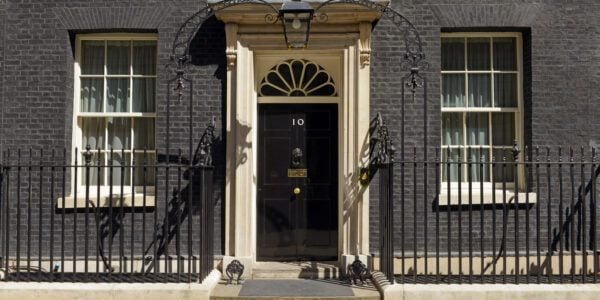
The economic impact of Brexit will leave less money for vital public services, according to new report

By Nuffield Foundation

The effective delivery of a range of vital public services is likely to decline after Brexit, according to a new report from the London School of Economics and Political Science (LSE) and funded by the Nuffield Foundation.

The report finds that the economic impact of Brexit will leave less money for these services, and a reduction in immigration means there will be fewer trained workers to work in key areas like health, social care, and housing construction.

Furthermore, the impact on public finances will come via negative effects on economic growth, and also reductions in migration – EU citizens coming to work in the UK currently contribute positively to the economy, and to the money available to spend on public services.

Reductions in immigration could in principle create new opportunities for UK workers but only if public investment is found for training and education, for example in healthcare, and higher wages, for example in social care.

There is also a risk to workers’ rights and other social safeguards: the need for new international trade deals may lead to lower standards, particularly if there is a “hard” Brexit. Pressures to secure new trade deals outside the EU may lead to accepting more competitive frameworks – which could undermine existing protections, including opening the NHS services to additional international health company competition or lower standards of food safety.

Some effects of Brexit could be more positive. House prices could fall, which would help affordability for some. And (subject to future trade deal negotiations) there may be new flexibilities around policies such as nationalisation, subsidies to UK industry, and allowing national and local government to award contracts to British or local firms. But the report points out that the UK has not previously used all its existing powers to introduce these types of policy, under existing EU rules, unlike other EU countries.

The research provides a comprehensive examination of the potential effects of Brexit in relation to social policies and disadvantage. It suggests that more vulnerable groups may be among those most affected by Brexit effects, including:

  • people receiving benefits, including Universal Credit, due to faster rises in inflation
  • people with fewer skills, who will be less able to navigate industrial restructuring;
  • people working long hours or in precarious employment, who have been beneficiaries of EU employment legislation;
  • people who are unable to afford to pay for social care if local authorities cannot provide it;
  • EU nationals living in the UK and British nationals in other EU countries, who may face difficulties accessing their social rights in practice.

The paper proposes five main actions to help mitigate Brexit risks:

  • investment in education and training to support health care needs;
  • more resources for public services, in part to raise wages in social care to attract UK workers;
  • a significant strategy of regional and industrial investment;
  • commitment that UK rights legislation will keep pace with progress made in the EU
  • immediately, an end to the cash freeze on working-age benefits, so that the most vulnerable are not hit hardest by the inflation caused by currency depreciation.

Dr Kitty Stewart, Associate Director of CASE said: “Some of the dangers for public services and for groups most at risk could be overcome with vigorous compensatory investment by the UK government. But this requires both political commitment and fiscal capacity. In practice, the government’s ability to make these investments looks set to be very tightly constrained by the economic impact of Brexit.”

Mark Franks, Director of Welfare at the Nuffield Foundation said: “In a debate that is understandably politically and emotionally charged, this analysis provides a new, independent, and comprehensive assessment of the likely impacts of Brexit on social policy across the board – from tax and spending and the provision of public services, to workers’ and human rights. Crucially, it also provides options for social policy that could help mitigate the risks of negative impacts, which are likely to be of value whatever precise form Brexit goes on to take.”

Related


Explore our projects

A portrait of a teenager wearing casual clothing on an overcast summer day in Whitley Bay, Northeastern England. They are standing and looking concerned as they use their smartphone.
In progress

Welfare | 2026 - 2028

The digital lives of care-experienced children

View project
A simple wall sign outside the British Treasury building at 1 Horse Guards Road, just off Whitehall, London.
In progress

Welfare | 2026 - 2030

IFS Green Budget 2026 – 2029

View project
Young well dressed businesswoman working on a computer at the office

Welfare | 2026 - 2029

Pain-at-Work Toolkit for employees with chronic pain (definitive trial) 

View project
In progress

Education | 2026 - 2028

The long-term impact of student loans in further education

View project

Welfare | 2026 - 2028

Examining gender pension gaps: trajectories over time in the UK

View project
Houses along a street in the UK

Welfare | 2026 - 2028

Towards housing affordability: local supply drivers and optimal policy

View project
In progress

Racial Diversity UK | Welfare | 2026 - 2027

Racial equality since devolution: Divergences, outcomes and frontiers

View project
voters entering polling station to vote in election

Welfare | 2025 - 2026

Tax, benefits and public spending in the 2026 devolved elections

View project

Welfare | 2025 - 2026

2026 Scottish Parliament and Senedd election analysis

View project
A shot of a grandfather sitting in a tractor with his young granddaughter, he is at his farm in North East, England. The grandfather and the girl's mother are teaching her about the farm.
In progress

Welfare | 2025 - 2028

Arthritis and farmers in England: Impacts, adaptations and prevention

View project
row of houses
In progress

Welfare | 2025 - 2028

Musculoskeletal conditions in underserved communities

View project

Welfare | 2025 - 2028

Inequalities and the future

View project
A simple wall sign outside the British Treasury building at 1 Horse Guards Road, just off Whitehall, London.
In progress

Welfare | 2026 - 2030

IFS Green Budget 2026 – 2029

View project
A portrait of a teenager wearing casual clothing on an overcast summer day in Whitley Bay, Northeastern England. They are standing and looking concerned as they use their smartphone.
In progress

Welfare | 2026 - 2028

The digital lives of care-experienced children

View project
Young well dressed businesswoman working on a computer at the office

Welfare | 2026 - 2029

Pain-at-Work Toolkit for employees with chronic pain (definitive trial) 

View project
In progress

Education | 2026 - 2028

The long-term impact of student loans in further education

View project

Welfare | 2025 - 2026

2026 Scottish Parliament and Senedd election analysis

View project
Houses along a street in the UK

Welfare | 2026 - 2028

Towards housing affordability: local supply drivers and optimal policy

View project

Welfare | 2026 - 2028

Examining gender pension gaps: trajectories over time in the UK

View project
voters entering polling station to vote in election

Welfare | 2025 - 2026

Tax, benefits and public spending in the 2026 devolved elections

View project

Welfare | 2025 - 2028

Actionable insights to tackle UK dietary inequalities

View project
A mid-level street view of an older brick social housing block. To the left is a large green tree.

Welfare | 2025 - 2026

Navigating social housing tenancies: Language and cultural barriers

View project
A heavily pregnant mother working at home on her laptop while talking to her kids as they stand near her.

Welfare | 2025 - 2028

Effective hybrid work: Childcare, work-life balance and well-being

View project

Welfare | 2025 - 2028

Inequalities and the future

View project
A simple wall sign outside the British Treasury building at 1 Horse Guards Road, just off Whitehall, London.
In progress

Welfare | 2026 - 2030

IFS Green Budget 2026 – 2029

View project
A portrait of a teenager wearing casual clothing on an overcast summer day in Whitley Bay, Northeastern England. They are standing and looking concerned as they use their smartphone.
In progress

Welfare | 2026 - 2028

The digital lives of care-experienced children

View project
In progress

Education | 2026 - 2028

The long-term impact of student loans in further education

View project
Kid playing with wood toys at pre school classroom.
In progress

Education | 2025 - 2027

What price is free? The price effects of England’s childcare reforms

View project
In progress

Education | 2025 - 2028

SleepBoost: The feasibility of supporting sleep to support language

View project
In progress

Racial Diversity UK | Welfare | 2026 - 2027

Racial equality since devolution: Divergences, outcomes and frontiers

View project
In progress

Racial Diversity UK | Welfare | 2025 - 2028

Decline to renewal: Race, deindustrialisation and working lives

View project
In progress

Racial Diversity UK | Welfare | 2025 - 2028

Better mixing: Supporting Scotland’s diverse future

View project
In progress

Racial Diversity UK | Welfare | 2025 - 2028

Voices for equity: Moving from evidence to action

View project
Two mothers cuddle their daughter on the sofa with their dog: Welfare access, assets and debts of LGBT+ people in the UK
In progress

Welfare | 2025 - 2027

Understanding fertility intentions in 21st century Britain

View project
In progress

Welfare | 2025 - 2027

Musculoskeletal conditions, employment retention and job quality

View project
lady looking out of the bus window
In progress

Welfare | 2025 - 2028

Economic inactivity, arthritis & depression: who, why & how to respond

View project
Black woman typing on laptop in living room
Reported

Welfare | 2024 - 2025

Enhancing, localising and democratising tax-benefit policy analysis

View project
A middle-aged man sat at home is looking at this phone while sorting pension paperwork.
Reported

Welfare | 2023 - 2025

Collective defined contribution pensions with investment choice

View project
Two little boys and a little girl, all wearing primary school uniform, work together to solve a puzzle in their classroom.
Reported

Education | 2023 - 2025

What has ‘Free School Meals’ measured and what are the implications?

View project
Elderly man drinking tea at home with professional carer
Reported

Welfare | 2023 - 2024

Evidencing the outsourcing of social care provision in England

View project
Older woman using a tablet to make a video call
Reported

Welfare | 2023 - 2025

Remote osteoarthritis peer-mentorship for socioeconomically underserved people

View project
Reported

Education | Welfare | 2022 - 2024

Understanding school attendance, education and labour market outcomes

View project
Grandparents having fun outdoors with their granddaughter, who is eating an apple and laughing: Understanding family and community vulnerabilities in transition to net zero
Reported

Welfare | 2021 - 2023

Understanding family and community vulnerabilities in transition to net zero

View project
Father and son using laptop at home
Reported

Welfare | 2021 - 2025

Developing a minimum digital living standard for households with children

View project
Code encounters algorithmic risk-profiling in housing: a family in their kitchen at home
Reported

Welfare | 2022 - 2024

Code encounters: algorithmic risk-profiling in housing

View project
The future of work and wellbeing. A man working from home during the COVID-19 crisis, having a video meeting with colleagues
Reported

Welfare | 2021 - 2024

The Future of Work and Well-being: The Pissarides Review

View project
Close up of a young girl and her father wearing protective face masks during the COVID-19 pandemic outside.
Reported

Welfare | 2021 - 2023

The Economy 2030 Inquiry: navigating a decade of change

View project
Toddler-gleefully-eats-baked-beans-How-COVID-19-is-affecting-food-security-proj
Reported

Welfare | 2020 - 2021

How the COVID-19 crisis is affecting food security

View project
Search projects

We improve people’s lives by funding research that informs social policy, primarily in Education, Welfare and Justice. We also fund student programmes that give young people skills and confidence in science and research.

We offer our grant-holders the freedom to frame questions and enable new thinking. Our research must stand up to rigorous academic scrutiny, but we understand that to be successful in effecting change, it also needs to be relevant to people’s experience.

Profile