Poorer children are less likely to benefit from free nursery places

By Nuffield Foundation

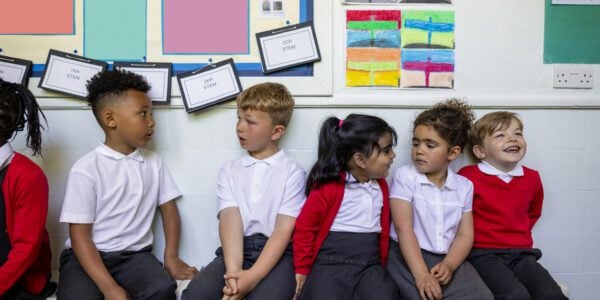
Free nursery places disproportionately benefit children from higher income families, according to new Nuffield-funded research at LSE’s Centre for Analysis of Social Exclusion (CASE).

Since 2004, all three-year-olds have been entitled to a free nursery place. In 2010 this entitlement rose from 12.5 to 15 hours a week and in 2013, free places were extended to two-year-olds from low-income families. Last year, there was an additional expansion to 30 funded hours a week for three and four-year-olds with working parents. The government currently spends £6 billion a year in total on early education and childcare.

Using the National Pupil Database, Dr Tammy Campbell, Dr Ludovica Gambaro and Dr Kitty Stewart from LSE’s CASE, examined all autumn-born four-year-olds attending nursery in January 2011 and asked whether they started attending when first eligible, in January 2010. A significant proportion, 18.4 per cent, had not done so.

Researchers found that almost one in five children delays taking up a free place in pre-school education – most of them from low-income families. Around one third of persistently poor children delayed, compared to one sixth of their higher-income peers.

Persistently poor children who claim free school meals (FSM) for all three years of early primary school are 13 percentage points less likely to attend for the full five terms of free pre-school education than children from higher-income families who never claim FSM.

The researchers also examined whether the type of pre-school provision available locally makes a difference to take-up. They found that in areas where more children take their places in Sure Start centres, take-up was highest among all children – and the gap between low- and higher-income children much smaller. In contrast, areas with most pre-school places provided through the private sector have the largest gap in take-up between low- and higher-income families.

The paper concludes by saying that “An autumn-born child in a higher income working family will benefit from five terms at 30 hours compared to three terms at 15 hours for a summer-born children in a family whose parents are unemployed. Without serious attention to this issue, the universal free places, while hailed as a great success in the prevalent policy discourse, look set to play a part in embedding or widening inequalities, in direct contrast to stated policy aims.”

Dr Tammy Campbell commented: “Universally funded pre-school education is not, in fact, being accessed equally by all children. The families who are benefitting most from the policy are those who are already advantaged in many ways – while low-income children miss out. The recent introduction of more free hours for parents earning up to £100,000 per annum is likely to worsen this situation, as well as closures of accessible provision in the state and voluntary sectors, including Sure Start centres. It’s time for a clear and transparent reassessment of the purpose of funding for the pre-school stage – looking properly at which children win under the current system, and at who misses out.”

Related


Explore our projects

A simple wall sign outside the British Treasury building at 1 Horse Guards Road, just off Whitehall, London.
New

Welfare | 2026 - 2030

IFS Green Budget 2026 – 2029

View project
A portrait of a teenager wearing casual clothing on an overcast summer day in Whitley Bay, Northeastern England. They are standing and looking concerned as they use their smartphone.
New

Welfare | 2026 - 2028

The digital lives of care-experienced children

View project
Over-the-shoulder shot of a female secondary school teacher having a one-to-one conversation with a male teenage student. They are both sitting down and she is maintaining eye contact as she is talking. The teacher is smiling and sharing a positive interaction with the student.
In progress

Education | 2026 - 2028

The impacts of Relational and Restorative Practice in school

View project
Young girl smiling and reading book on green sofa
In progress

Education | 2026 - 2028

Love to Read Phase 2: A large-scale evaluation

View project

Education | 2026 - 2027

The effects of permanent school closures on pupils’ outcomes

View project
In progress

Education | 2026 - 2028

The long-term impact of student loans in further education

View project
Young well dressed businesswoman working on a computer at the office
New

Welfare | 2026 - 2029

Pain-at-Work Toolkit for employees with chronic pain (definitive trial) 

View project
Young woman using a digital printing machine on an apprenticeship

Education | 2026 - 2027

Apprenticeship Pathways

View project

Welfare | 2026 - 2028

Examining gender pension gaps: trajectories over time in the UK

View project
Early years professionals playing with children
In progress

Education | 2026 - 2028

Noise in early years settings for children from under-privileged backgrounds

View project
Female Student Standing Outside College Building

Education | 2026 - 2027

How do students with SEND fare in the transition to post-16 education?

View project
Parents with baby
In progress

Education | 2026 - 2028

Your Baby and You: Developing the home learning environment for babies

View project
A simple wall sign outside the British Treasury building at 1 Horse Guards Road, just off Whitehall, London.
New

Welfare | 2026 - 2030

IFS Green Budget 2026 – 2029

View project
A portrait of a teenager wearing casual clothing on an overcast summer day in Whitley Bay, Northeastern England. They are standing and looking concerned as they use their smartphone.
New

Welfare | 2026 - 2028

The digital lives of care-experienced children

View project
Young well dressed businesswoman working on a computer at the office
New

Welfare | 2026 - 2029

Pain-at-Work Toolkit for employees with chronic pain (definitive trial) 

View project

Education | 2026 - 2027

The effects of permanent school closures on pupils’ outcomes

View project
Female Student Standing Outside College Building

Education | 2026 - 2027

How do students with SEND fare in the transition to post-16 education?

View project
Young woman using a digital printing machine on an apprenticeship

Education | 2026 - 2027

Apprenticeship Pathways

View project
Young girl smiling and reading book on green sofa
In progress

Education | 2026 - 2028

Love to Read Phase 2: A large-scale evaluation

View project
Pioneering study reveals teaching techniques which boost exam performance: a teacher sits on a desk among her secondary school pupils, all looking at the board
In progress

Education | 2026 - 2027

A study of multi-grade teaching in English primary schools

View project
Over-the-shoulder shot of a female secondary school teacher having a one-to-one conversation with a male teenage student. They are both sitting down and she is maintaining eye contact as she is talking. The teacher is smiling and sharing a positive interaction with the student.
In progress

Education | 2026 - 2028

The impacts of Relational and Restorative Practice in school

View project
Parents with baby
In progress

Education | 2026 - 2028

Your Baby and You: Developing the home learning environment for babies

View project
In progress

Education | 2026 - 2028

The long-term impact of student loans in further education

View project

Welfare | 2025 - 2026

2026 Scottish Parliament and Senedd election analysis

View project
Young girl smiling and reading book on green sofa
In progress

Education | 2026 - 2028

Love to Read Phase 2: A large-scale evaluation

View project
Pioneering study reveals teaching techniques which boost exam performance: a teacher sits on a desk among her secondary school pupils, all looking at the board
In progress

Education | 2026 - 2027

A study of multi-grade teaching in English primary schools

View project
Over-the-shoulder shot of a female secondary school teacher having a one-to-one conversation with a male teenage student. They are both sitting down and she is maintaining eye contact as she is talking. The teacher is smiling and sharing a positive interaction with the student.
In progress

Education | 2026 - 2028

The impacts of Relational and Restorative Practice in school

View project
Parents with baby
In progress

Education | 2026 - 2028

Your Baby and You: Developing the home learning environment for babies

View project
In progress

Education | 2026 - 2028

The long-term impact of student loans in further education

View project
In progress

Education | 2026 - 2027

Trialling an assessment protocol for LLM-powered careers advice 

View project
Teaching assistant plays with little boy at nursery
In progress

Education | 2025 - 2026

Room to Grow: School-based Nursery Places and the Disadvantage Gap

View project
In progress

Education | 2026 - 2028

School climate and pupil belonging, attendance and achievement

View project
Early years professionals playing with children
In progress

Education | 2026 - 2028

Noise in early years settings for children from under-privileged backgrounds

View project
In progress

Education | 2025 - 2026

Childminder-led structured language enrichment in the Early Years

View project
A horizontal image of two children outdoors using a big mental pan to make mud pies, while a young woman supervises. The children are both wrapped up warm in coats and are contently playing
In progress

Education | 2025 - 2028

Policy change and inequalities in early childhood education and care

View project
A cheerful young man wearing a green apron and a grey hoodie. He is placing fresh baked goods outside a cafe, holding a bowl filled with freshly baked bread. The cafe is in the background.
In progress

Education | 2026 - 2027

Student employment and subsequent education and labour market outcomes 

View project
New

Racial Diversity UK | Welfare | 2025 - 2028

Decline to renewal: Race, deindustrialisation and working lives

View project
New

Racial Diversity UK | Welfare | 2025 - 2028

Better mixing: Supporting Scotland’s diverse future

View project
Two mothers cuddle their daughter on the sofa with their dog: Welfare access, assets and debts of LGBT+ people in the UK
New

Welfare | 2025 - 2027

Understanding fertility intentions in 21st century Britain

View project
New

Education | 2025 - 2025

Exploring Multi Academy Trust approaches to Artificial Intelligence

View project
New

Welfare | 2025 - 2027

Musculoskeletal conditions, employment retention and job quality

View project
row of houses
New

Welfare | 2025 - 2028

Musculoskeletal conditions in underserved communities

View project
A shot of a grandfather sitting in a tractor with his young granddaughter, he is at his farm in North East, England. The grandfather and the girl's mother are teaching her about the farm.
New

Welfare | 2025 - 2028

Arthritis and farmers in England: Impacts, adaptations and prevention

View project
traditional detached house within residential estate in England UK, several houses in view have solar panels on the roof.
New

Welfare | 2025 - 2026

Distributional impacts of net zero on electricity consumers

View project
Portrait of a senior woman at home checking a letter in the mail
New

Welfare | 2025 - 2026

How can low earners afford a commensurate retirement income?

View project
Female electrician arrives at job. She is wearing an orange hi-vis jacket and behind her is a van.
New

Welfare | 2025 - 2026

Characterising the job ladder in England

View project
Close up of a Young woman going over her retirement savings at home while using her laptop
New

Welfare | 2025 - 2026

Tackling the information gap in retirement saving decisions

View project
New

Welfare | 2025 - 2027

All women are born (un)equal: menopause, HRT and women’s well-being

View project
Pre-school students sitting in an art classroom being taught by a teacher. The classroom is colourful and the children are sat at a big table.
Reported

Education | 2024 - 2026

A comparative analysis of EY workforce policy in the four UK nations

View project
Sixth form student smiling in a classroom while a teacher helps a classmate in the row behind him
Reported

Education | 2023 - 2025

The Extended Project Qualification: An Opportunity for All?

View project
Two little boys and a little girl, all wearing primary school uniform, work together to solve a puzzle in their classroom.
Reported

Education | 2023 - 2025

What has ‘Free School Meals’ measured and what are the implications?

View project
Elderly man drinking tea at home with professional carer
Reported

Welfare | 2023 - 2024

Evidencing the outsourcing of social care provision in England

View project
Male and female apprentices looking at car engine
Reported

Education | 2022 - 2025

Work or study? Gender and the transition from school to work

View project
Teenage sixth form students taking notes in a lesson
Reported

Education | 2022 - 2025

Comparing inequality and outcomes across post-16 education in the UK

View project
Little girl watches TV on her own at home
Reported

Education | 2023 - 2025

Do same language subtitles help children learn to read?

View project
Reception class children using a parachute in a PE lesson
Reported

Education | 2022 - 2023

A movement and story-telling intervention for reception children

View project
Reported

Education | Welfare | 2022 - 2024

Understanding school attendance, education and labour market outcomes

View project
A classroom of children with their hands up to answer a question, with two teachers at the front of the classroom
Reported

Education | 2022 - 2024

Inspecting the inspectorate: new insights into Ofsted inspections

View project
Reported

Education | 2022 - 2025

The medium-term impact of the COVID-19 pandemic on pupils with SEND

View project
Grandparents having fun outdoors with their granddaughter, who is eating an apple and laughing: Understanding family and community vulnerabilities in transition to net zero
Reported

Welfare | 2021 - 2023

Understanding family and community vulnerabilities in transition to net zero

View project
Search projects

We improve people’s lives by funding research that informs social policy, primarily in Education, Welfare and Justice. We also fund student programmes that give young people skills and confidence in science and research.

We offer our grant-holders the freedom to frame questions and enable new thinking. Our research must stand up to rigorous academic scrutiny, but we understand that to be successful in effecting change, it also needs to be relevant to people’s experience.

Profile