School leaders want government to address surge in pupil COVID-related anxiety

Schools are experiencing an increase in pupils with mental health issues, social distancing is posing a variety of challenges to classroom teaching, and school leaders feel the government’s approach to learning recovery is misconceived. This is according to new Nuffield-funded research from the National Foundation for Educational Research (NFER).

The NFER’s policy briefing, funded by the Nuffield Foundation, highlights the results of in-depth qualitative interviews with senior school leaders, in schools serving predominantly deprived populations to understand the continuing implications of the COVID-19 pandemic for pupils’ education in mainstream schools.  

Building on NFER’s 2020 COVID-19 school surveys, it provides insights into schools’ and pupils’ needs. The interviews were conducted in May and June 2021 with 50 senior leaders from mainstream primary and secondary schools, serving predominantly deprived communities across England. We know from our previous work and other evidence that these schools and pupils have been most seriously affected by the pandemic.

This is one of two separate Nuffield-funded policy briefings focusing on the impact of COVID-19 on teaching and learning; and pupils’ well-being and mental health. The second briefing, based on research by ASK Research with support from NFER, focuses on special schools and is also published today.

Both briefings reveal interim findings, with the full reports planned for release in autumn 2021.

Mainstream schools’ findings

The over-riding message from the senior school leaders who took part, is that they need the funding, support and autonomy to make decisions in the best interests of their pupils. They also call on the government to provide clear guidance on future plans for assessment and accountability, and to take urgent action to free up capacity in critical health and social services for children and their families.

Key findings include:

  • Though most pupils have been back in school full time since 8 March 2021, education is hardly back to normal. Schools are supporting children to recover both academically and in terms of their well-being, but this is a long-term undertaking made more challenging by measures to reduce COVID-19 infection.
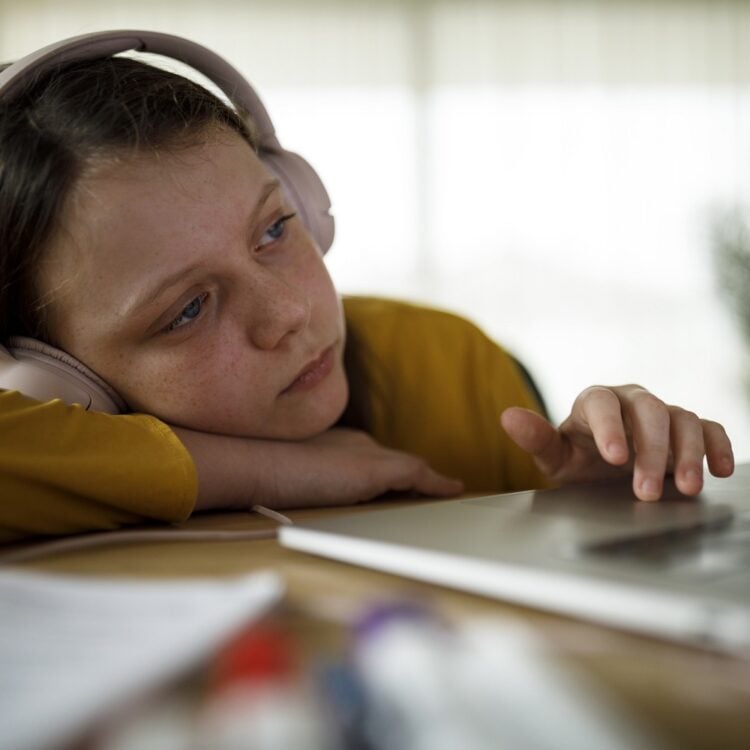
  • Most senior leaders report that some of their pupils are suffering from COVID-related anxiety. Concerningly, a substantial minority report an increase in incidents of self-harm. Schools are putting measures in place to promote pupils’ emotional and mental health, and would like to do more. They cannot always get the support they need from specialist services, such as Children and Adolescent Mental Health Services (CAMHS), speech and language and social services.
  • School leaders say that the pupils most affected by the pandemic were already vulnerable, including those with challenging home circumstances and special educational needs and disabilities (SEND). However, well-being and mental health issues are affecting pupils not previously identified as vulnerable too.
  • Some senior leaders say that pupils’ behaviour is good or better than before, but some report an increase in incidents of poor behaviour and lack of self-control.
  • Most senior leaders say that social distancing is posing a variety of challenges to the quality of teaching and learning. For example, teachers are unable to circulate round their classes to provide feedback on pupils’ work and there is little interaction between pupils.
  • Many senior leaders report a reduction in enrichment activities (e.g. creative arts, sports and trips), largely due to infection control measures. They want to provide more variety and enjoyment for pupils, both within the school day and through extra-curricular activities.
  • School leaders feel the government’s current approach to learning recovery is misconceived. They see the emphasis on academic ‘catch up’ as unhelpful and want an equal focus on emotional/well-being recovery and enrichment alongside academic catch up. They want the government to provide adequate funding for recovery over a period of years and to allow schools to use it flexibly.

Recommendations

Well-being and mental health

  • The government needs urgently to review the provision in place to address the surge in Covid-related anxiety and mental health issues among children and young people. Further research could help to quantify quite how much additional funding and support is needed across the country; however we can be clear, given existing surveys and the consensus in this study, that there is a case for action now.
  • The government should consider how best to support schools – particularly those serving deprived communities – in providing health and well-being services as part of a joined-up plan.
  • Though the government’s announcement of £79 million investment to help children access community mental health is welcome, there appears to be a need to increase investment in specialist mental health (CAMHS), speech and language and social care for children, young people and families, so they are not left without support.
  • The Department for Education should recognise the pressures that school staff are still facing and ensure that staff well-being and workload are properly considered in policy development.

Infection control measures in schools

  • The harmful effects of social distancing and self-isolation on pupils’ education and well-being need to be understood and acknowledged. Schools will need time to reorganise and recover from these effects when the restrictions are lifted.
  • If it is necessary to impose stricter infection controls again, on either a local or national basis, the negative consequences for well-being and learning need to be mitigated as far as possible.
  • DfE and Ofsted need to do all in their power to enable schools to focus on all elements of the curriculum, including practical activities, and to provide a range of extra-curricular activities which enrich pupils’ learning experiences.

Learning recovery

  • ‘Catch-up’  funding should be viewed and provided more holistically – not confined to academic needs. Senior leaders want the freedom and flexibility to deploy funds to support their pupils in the most appropriate ways within their contexts – for example schools with many anxious pupils may need to devote more resources to well-being support. There needs to be a long-term proactive assessment and support plan – focused on all affected cohorts as they move through the system. This should encompass curriculum, assessment and accountability; and include plans for a variety of different scenarios (e.g. in the event of further periods of school closure).

Caroline Sharp, Research Director at NFER, and Co-Author of the mainstream schools’ policy briefing said:

“Despite it being over three months since all children have returned to school full-time, our insights shows that mainstream education has not gone back to normal, due to the continuing impact of the pandemic. 

“Most senior leaders we interviewed have expressed their widespread concern for their pupils’ well-being and mental health. They want to support their pupils, but are struggling to do so without adequate funding and being able to rely on specialist services. That is why they are calling on the government to provide them and critical support services, with the necessary funding, and give them the independence, to enable them to best support the needs of young people.”

Josh Hillman, Director of Education at the Nuffield Foundation said:

“Whilst missed learning during the various partial school closures is of great concern, this report shows that pupils’ well-being and mental health have also been affected.

“The findings echo Nuffield-funded research from the ISER at the University of Essex which found that school closures had a significant negative impact on children’s mental health.

“Social distancing in schools has made interactions between teachers and pupils and group work much harder and enrichment beyond the core curriculum has been more limited.

“In addition to tackling the academic impact of the pandemic, additional resource and support is needed to help schools respond to the significant challenges their students are facing in terms of anxiety and other mental health issues.”

Related


Explore our projects

Four secondary school pupils outside school, talking to each other. Two boys and two girls, in school uniform and carrying books. One of the girls looks anxious.
New

Education | Equality, diversity and inclusion | 2027 - 2029

Religion and belief-related harassment in secondary schools

View project
New

Welfare | 2026 - 2028

Dynamism and the geography of labour reallocation

View project
A boy, wearing his PE kit, leans against the lockers. He's on his own in a corridor at school and is looking at the camera.
New

Education | 2026 - 2027

School belonging and pupil outcomes: Evidence from PISA, PIRLS & TIMSS

View project
Older man working from home on a video call
New

Welfare | 2026 - 2028

Job mobility for older workers in semi-routine and routine occupations 

View project
A child with headphones sitting on her own using a laptop
New

Education | 2026 - 2028

Understanding Anxiety, Depression, and Stress in Pupils with SEND

View project
Crowd of pedestrians on Westminster bridge with Big Ben in the background
New

Welfare | 2026 - 2029

Advancing evidence-based policy with AI & tax-benefit microsimulation

View project
Teacher workforce
New

Education | 2026 - 2028

Ethnic diversity in England’s education workforce 

View project
New

Welfare | 2026 - 2028

From policy to impact: Racial equity practices in FTSE 350 firms 

View project
Two schoolchildren in white shirts and striped ties are sitting at a desk in a classroom, engaged with a tablet. The girl in the foreground is smiling as she interacts with the screen, while the boy beside her leans in, also smiling. The classroom setting is bright, with blurred educational posters on the walls in the background.
New

Education | 2026 - 2027

Experimentation to evidence: Assessing generative AI impact in schools

View project
A portrait of a teenager wearing casual clothing on an overcast summer day in Whitley Bay, Northeastern England. They are standing and looking concerned as they use their smartphone.
In progress

Welfare | 2026 - 2028

The digital lives of care-experienced children

View project
A simple wall sign outside the British Treasury building at 1 Horse Guards Road, just off Whitehall, London.
In progress

Welfare | 2026 - 2030

IFS Green Budget 2026 – 2029

View project
Group of teenage boys at school in uniform
New

Education | 2026 - 2027

Smartphone experience and school policy

View project
New

Welfare | 2026 - 2028

From policy to impact: Racial equity practices in FTSE 350 firms 

View project
Crowd of pedestrians on Westminster bridge with Big Ben in the background
New

Welfare | 2026 - 2029

Advancing evidence-based policy with AI & tax-benefit microsimulation

View project
A boy, wearing his PE kit, leans against the lockers. He's on his own in a corridor at school and is looking at the camera.
New

Education | 2026 - 2027

School belonging and pupil outcomes: Evidence from PISA, PIRLS & TIMSS

View project
Four secondary school pupils outside school, talking to each other. Two boys and two girls, in school uniform and carrying books. One of the girls looks anxious.
New

Education | Equality, diversity and inclusion | 2027 - 2029

Religion and belief-related harassment in secondary schools

View project
Two schoolchildren in white shirts and striped ties are sitting at a desk in a classroom, engaged with a tablet. The girl in the foreground is smiling as she interacts with the screen, while the boy beside her leans in, also smiling. The classroom setting is bright, with blurred educational posters on the walls in the background.
New

Education | 2026 - 2027

Experimentation to evidence: Assessing generative AI impact in schools

View project
Teacher workforce
New

Education | 2026 - 2028

Ethnic diversity in England’s education workforce 

View project
Older man working from home on a video call
New

Welfare | 2026 - 2028

Job mobility for older workers in semi-routine and routine occupations 

View project
New

Welfare | 2026 - 2028

Dynamism and the geography of labour reallocation

View project
A child with headphones sitting on her own using a laptop
New

Education | 2026 - 2028

Understanding Anxiety, Depression, and Stress in Pupils with SEND

View project
Group of teenage boys at school in uniform
New

Education | 2026 - 2027

Smartphone experience and school policy

View project
A simple wall sign outside the British Treasury building at 1 Horse Guards Road, just off Whitehall, London.
In progress

Welfare | 2026 - 2030

IFS Green Budget 2026 – 2029

View project
A portrait of a teenager wearing casual clothing on an overcast summer day in Whitley Bay, Northeastern England. They are standing and looking concerned as they use their smartphone.
In progress

Welfare | 2026 - 2028

The digital lives of care-experienced children

View project
New

Welfare | 2026 - 2028

From policy to impact: Racial equity practices in FTSE 350 firms 

View project
Crowd of pedestrians on Westminster bridge with Big Ben in the background
New

Welfare | 2026 - 2029

Advancing evidence-based policy with AI & tax-benefit microsimulation

View project
Four secondary school pupils outside school, talking to each other. Two boys and two girls, in school uniform and carrying books. One of the girls looks anxious.
New

Education | Equality, diversity and inclusion | 2027 - 2029

Religion and belief-related harassment in secondary schools

View project
Two schoolchildren in white shirts and striped ties are sitting at a desk in a classroom, engaged with a tablet. The girl in the foreground is smiling as she interacts with the screen, while the boy beside her leans in, also smiling. The classroom setting is bright, with blurred educational posters on the walls in the background.
New

Education | 2026 - 2027

Experimentation to evidence: Assessing generative AI impact in schools

View project
Older man working from home on a video call
New

Welfare | 2026 - 2028

Job mobility for older workers in semi-routine and routine occupations 

View project
New

Welfare | 2026 - 2028

Dynamism and the geography of labour reallocation

View project
A child with headphones sitting on her own using a laptop
New

Education | 2026 - 2028

Understanding Anxiety, Depression, and Stress in Pupils with SEND

View project
Group of teenage boys at school in uniform
New

Education | 2026 - 2027

Smartphone experience and school policy

View project
A simple wall sign outside the British Treasury building at 1 Horse Guards Road, just off Whitehall, London.
In progress

Welfare | 2026 - 2030

IFS Green Budget 2026 – 2029

View project
A portrait of a teenager wearing casual clothing on an overcast summer day in Whitley Bay, Northeastern England. They are standing and looking concerned as they use their smartphone.
In progress

Welfare | 2026 - 2028

The digital lives of care-experienced children

View project
In progress

Education | 2026 - 2027

The effects of permanent school closures on pupils’ outcomes

View project
Female Student Standing Outside College Building
In progress

Education | 2026 - 2027

How do students with SEND fare in the transition to post-16 education?

View project
Reported

Education | 2025 - 2025

Exploring Multi Academy Trust approaches to Artificial Intelligence

View project
Pre-school students sitting in an art classroom being taught by a teacher. The classroom is colourful and the children are sat at a big table.
Reported

Education | 2024 - 2026

A comparative analysis of EY workforce policy in the four UK nations

View project
Black woman typing on laptop in living room
Reported

Welfare | 2024 - 2025

Enhancing, localising and democratising tax-benefit policy analysis

View project
Reported

Education | Welfare | 2024 - 2026

Choices, chances, and transitions around creative further and higher education

View project
Young girl using an iPad at home
Reported

Education | 2024 - 2024

Early years digital media literacy review

View project
Secondary school music teacher smiles at students working together at a keyboard.
Reported

Education | 2024 - 2026

Teacher recruitment & retention challenges in England

View project
A middle-aged man sat at home is looking at this phone while sorting pension paperwork.
Reported

Welfare | 2023 - 2025

Collective defined contribution pensions with investment choice

View project
Sixth form student smiling in a classroom while a teacher helps a classmate in the row behind him
Reported

Education | 2023 - 2025

The Extended Project Qualification: An Opportunity for All?

View project
Teenage sixth form students walking into college
Reported

Education | 2023 - 2025

Revisiting the raising of the participation age to 18 in England

View project
Two little boys and a little girl, all wearing primary school uniform, work together to solve a puzzle in their classroom.
Reported

Education | 2023 - 2025

What has ‘Free School Meals’ measured and what are the implications?

View project
Grandmother with little children with pen and paper
Reported

Education | 2023 - 2025

Improving early mathematical skills by supporting home learning

View project
Elderly man drinking tea at home with professional carer
Reported

Welfare | 2023 - 2024

Evidencing the outsourcing of social care provision in England

View project
Search projects

We improve people’s lives by funding research that informs social policy, primarily in Education, Welfare and Justice. We also fund student programmes that give young people skills and confidence in science and research.

We offer our grant-holders the freedom to frame questions and enable new thinking. Our research must stand up to rigorous academic scrutiny, but we understand that to be successful in effecting change, it also needs to be relevant to people’s experience.

Profile