Beyond work: Giving care leavers a fair start

By Lisa Harker

There can be no doubt that the UK faces a serious challenge: too many young people are neither earning nor learning.

Alan Milburn and his team have done an impressive job of putting this issue on the national agenda. Over the 12 months of this government-commissioned Review, they have engaged young people, employers, government and civil society to find ways to confront the challenge head-on.

The final report makes recommendations spanning early education to the world of work. Whether these are adopted in full or in part, the Review will have a lasting impact on the lives of children who have been in care because it recognises that the state needs to be held to account for helping them make the transition into employment.

A persistent gap in opportunity

A staggering 40% of care leavers aged 19–21 are not in education, employment or training (NEET). Young people who have been in the care of the state are three times more likely than their peers to be neither earning nor learning. This gap has not narrowed since national data collection began in 2018.

The Milburn Review recognises the many reasons why care leavers are particularly disadvantaged. They are more likely to have experienced a disrupted education, have special educational needs or disabilities, achieve lower attainment, and experience poor mental health and wellbeing. Many begin living independently at an earlier age. Some face unstable housing, and many have experienced multiple moves. They are also less likely to have a trusted adult to advocate for them. Employers, meanwhile, may assume levels of stability, support and work history that care-experienced young people are less likely to have.

Simply offering care leavers the same support as their peers will not close the gap in their education and employment outcomes.

What the Milburn Review recommends

Significantly, the Review proposes judging Strategic Authorities on whether they are closing the participation gap between care leavers and other young people. Every ‘Area Youth Participation Plan’ will be required to explain how this will be achieved.

The Review also recommends that care-experienced young people are prioritised for early support. The proposed ‘Youth Opportunity Service’ will offer young people an adviser and access to employment, health, disability and wider youth support. For care-experienced young people at risk of becoming disengaged from education or employment, the Review argues this work should begin at 16, rather than waiting until they are 18.

The Review also proposes additional financial support for care leavers, recognising that they cannot turn to the bank of Mum and Dad. It recommends setting the proposed Youth Allowance, which would replace existing benefits, at a higher level for care leavers. Those not in education, employment or training should also be entitled to a ‘Transition Allowance’ of £50 a week for six months, conditional on working with their local Youth Opportunity Service. A similar scheme in Trafford successfully helped more care leavers into work.

To encourage employers to take on care leavers, an additional premium payment of £2,000 will be offered.

What the evidence tells us

Together these recommendations align with emerging evidence on how best to support care-experienced young people into work. A small number of interventions are currently being tested in randomised controlled trials, with promising early findings. They tend to share three features: sustained one-to-one support, a tailored support package, and active help to secure opportunities in education, employment and training.

The measures set out in the Milburn Review are therefore very welcome and have the potential to start to close the gap in the NEET rate between care leavers and the peers for the first time.

Getting into work starts with better care

But we should not assume that helping care-experienced young people into work is solely a matter of supporting the transition from education to employment.

Wider improvements to the support young people receive when they are in, and leaving, care may matter as much as, or even more than, changes to employment support. Tackling the social isolation of young people leaving care and the lack of trusted adults around them is a prerequisite to change.

Around 10,000 children in care are currently living in independent, semi-independent or supported accommodation in England. The law only requires children in care to live under adult supervision and protection until they are 16 and the number of 16- and 17-year-olds legally in the care of the state and living independently or semi-independently has more than doubled in the last decade to at least one in every three.

So the Government must look for changes beyond the careers adviser or jobcentre and ultimately at the quality of ‘care’ in the care system. Entering work is not simply about being helped to become work-ready and finding the right job. Young people also need the basic building blocks of life in place to make the most of those opportunities.

Lisa Harker is Director of Nuffield Family Justice Observatory, one of our expert Centres. Nuffield FJO makes life better for children and families by holding a mirror to the family justice system.

Explore our projects

The golden statue of Lady Justice atop the famous Old Bailey law courts in London, England against a brooding stormy sky.
In progress

Justice | 2026 - 2027

Using AI in administrative tribunals: A grounded “scan” of use cases

View project
Older man sitting on steps with concerned look
In progress

Justice | 2026 - 2027

African and Caribbean perspectives on navigating modern slavery

View project
Serious-teenage-girl-gestures-as-sits-on-couch-in-school-counselor-office-Mental-health-service-provision-for-children-state-care-England-PROJ
In progress

Education | Justice | 2026 - 2028

Joined up lives: Improving outcomes for children and young people

View project
In progress

Welfare | 2026 - 2028

The financial challenges of adoption: Practice & policy implications

View project
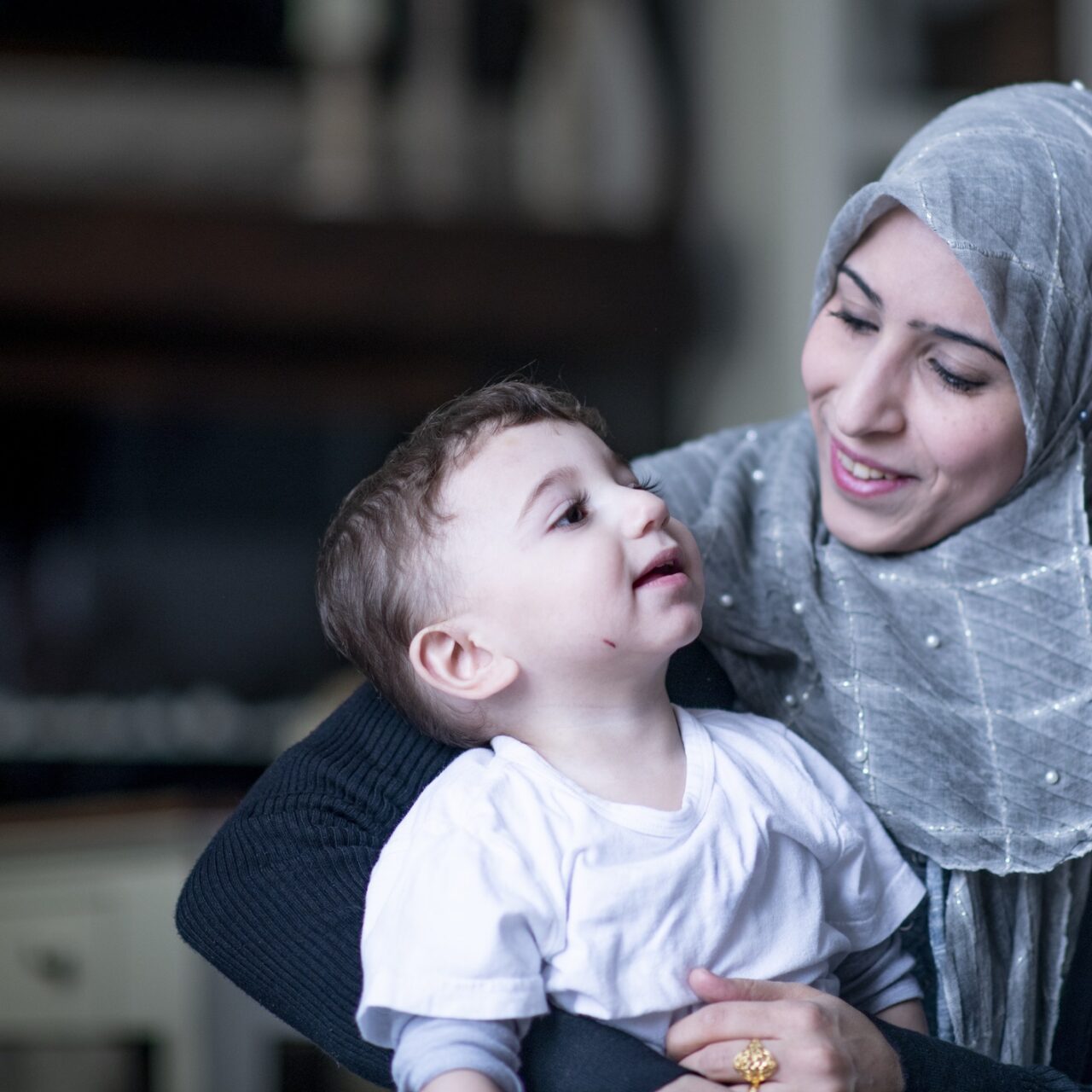
Mother wearing hijab holding her toddler son on her knee, smiling at each other
In progress

Welfare | 2026 - 2028

Co-designing health visitor support for refugee families in temporary accommodation

View project
In progress

Welfare | 2026 - 2028

Dynamism and the geography of labour reallocation

View project
Older man working from home on a video call
In progress

Welfare | 2026 - 2028

Job mobility for mid-to-late career workers in semi-routine and routine occupations

View project
Crowd of pedestrians on Westminster bridge with Big Ben in the background
In progress

Welfare | 2026 - 2029

Advancing evidence-based policy with AI & tax-benefit microsimulation

View project
Metropolitan policeman standing guard with a crowd nearby
In progress

Justice | 2026 - 2027

Foundations for an evidence-based extremism resilience framework 

View project
In progress

Welfare | 2026 - 2028

From policy to impact: Racial equity practices in FTSE 350 firms 

View project
Young well dressed businesswoman working on a computer at the office
In progress

Welfare | 2026 - 2028

AI, performance, and wellbeing: A field experiment

View project
Houses along a street in the UK
In progress

Welfare | 2026 - 2028

Locked Out of Warmth

View project
Serious-teenage-girl-gestures-as-sits-on-couch-in-school-counselor-office-Mental-health-service-provision-for-children-state-care-England-PROJ
In progress

Education | Justice | 2026 - 2028

Joined up lives: Improving outcomes for children and young people

View project
Older man sitting on steps with concerned look
In progress

Justice | 2026 - 2027

African and Caribbean perspectives on navigating modern slavery

View project
In progress

Welfare | 2026 - 2028

The financial challenges of adoption: Practice & policy implications

View project
Houses along a street in the UK
In progress

Welfare | 2026 - 2028

Locked Out of Warmth

View project
Metropolitan policeman standing guard with a crowd nearby
In progress

Justice | 2026 - 2027

Foundations for an evidence-based extremism resilience framework 

View project
Mother wearing hijab holding her toddler son on her knee, smiling at each other
In progress

Welfare | 2026 - 2028

Co-designing health visitor support for refugee families in temporary accommodation

View project
Young well dressed businesswoman working on a computer at the office
In progress

Welfare | 2026 - 2028

AI, performance, and wellbeing: A field experiment

View project
In progress

Welfare | 2026 - 2028

From policy to impact: Racial equity practices in FTSE 350 firms 

View project
Crowd of pedestrians on Westminster bridge with Big Ben in the background
In progress

Welfare | 2026 - 2029

Advancing evidence-based policy with AI & tax-benefit microsimulation

View project
The golden statue of Lady Justice atop the famous Old Bailey law courts in London, England against a brooding stormy sky.
In progress

Justice | 2026 - 2027

Using AI in administrative tribunals: A grounded “scan” of use cases

View project
Older man working from home on a video call
In progress

Welfare | 2026 - 2028

Job mobility for mid-to-late career workers in semi-routine and routine occupations

View project
In progress

Welfare | 2026 - 2028

Dynamism and the geography of labour reallocation

View project
Young well dressed businesswoman working on a computer at the office
Reported

Justice | 2024 - 2025

Developing a digital legal knowledge hub for social welfare law

View project
Black woman typing on laptop in living room
Reported

Welfare | 2024 - 2025

Enhancing, localising and democratising tax-benefit policy analysis

View project
Reported

Education | Welfare | 2024 - 2026

Choices, chances, and transitions around creative further and higher education

View project
Reported

Justice | 2024 - 2025

Immigration detention and the rule of law

View project
Reported

Justice | 2024 - 2025

Crossing boundaries: Co-designing support for vulnerable young people

View project
A middle-aged man sat at home is looking at this phone while sorting pension paperwork.
Reported

Welfare | 2023 - 2025

Collective defined contribution pensions with investment choice

View project
Reported

Justice | 2019 - 2023

Born into care: best practice guidelines

View project
Elderly man drinking tea at home with professional carer
Reported

Welfare | 2023 - 2024

Evidencing the outsourcing of social care provision in England

View project
Older woman using a tablet to make a video call
Reported

Welfare | 2023 - 2025

Remote osteoarthritis peer-mentorship for socioeconomically underserved people

View project
Reported

Justice | 2022 - 2024

Transparency and judicial review: a study of the duty of candour

View project
Older man working from home on a video call
Reported

Welfare | 2022 - 2024

The impact of pension auto-enrolment and COVID-19 on saving behaviours

View project
A teenage boy outdoors
Reported

Justice | 2022 - 2024

Child First: examining children’s collaboration in the Youth Justice System

View project
Search projects

We improve people’s lives by funding research that informs social policy, primarily in Education, Welfare and Justice. We also fund student programmes that give young people skills and confidence in science and research.

We offer our grant-holders the freedom to frame questions and enable new thinking. Our research must stand up to rigorous academic scrutiny, but we understand that to be successful in effecting change, it also needs to be relevant to people’s experience.

Profile