Youth Justice Spotlight: Dr Claire Fitzpatrick

By Nuffield Foundation

Criminology lecturer Dr Claire Fitzpatrick reflects on the experiences that inspire her research into criminal and youth justice.

Dr Claire Fitzpatrick, Senior Lecturer in Criminology at Lancaster University, received a grant from the Foundation for a three-year project to explore the experiences and perceptions of girls and women in care and their involvement with the criminal justice system. Her research argues that care-experienced girls and women should be diverted from prison into community alternatives wherever possible.

Tell us about your Nuffield-funded project

The project explored the neglected experiences of care-experienced girls and women in the youth and adult criminal justice systems. It involved an international literature review, a data scoping exercise highlighting gaps in the quantitative evidence base, and an analysis of local authority protocols aimed at preventing unnecessary criminalisation in care. A key focus was the 94 qualitative interviews, including with care-experienced women in prison, girls and young women in the community in contact with the youth justice system, and practitioners from children’s services, the police, youth justice, probation, prisons and the judiciary.

What were the origins of the project?

The relative neglect of research into how to disrupt gendered pathways between care and custody was one thing that inspired this work. After carrying out pilot interviews with practitioners, it became clear that this was an issue that warranted serious attention, and that we should resist attempts to dismiss the experiences of girls in youth justice because they are fewer in number than boys.
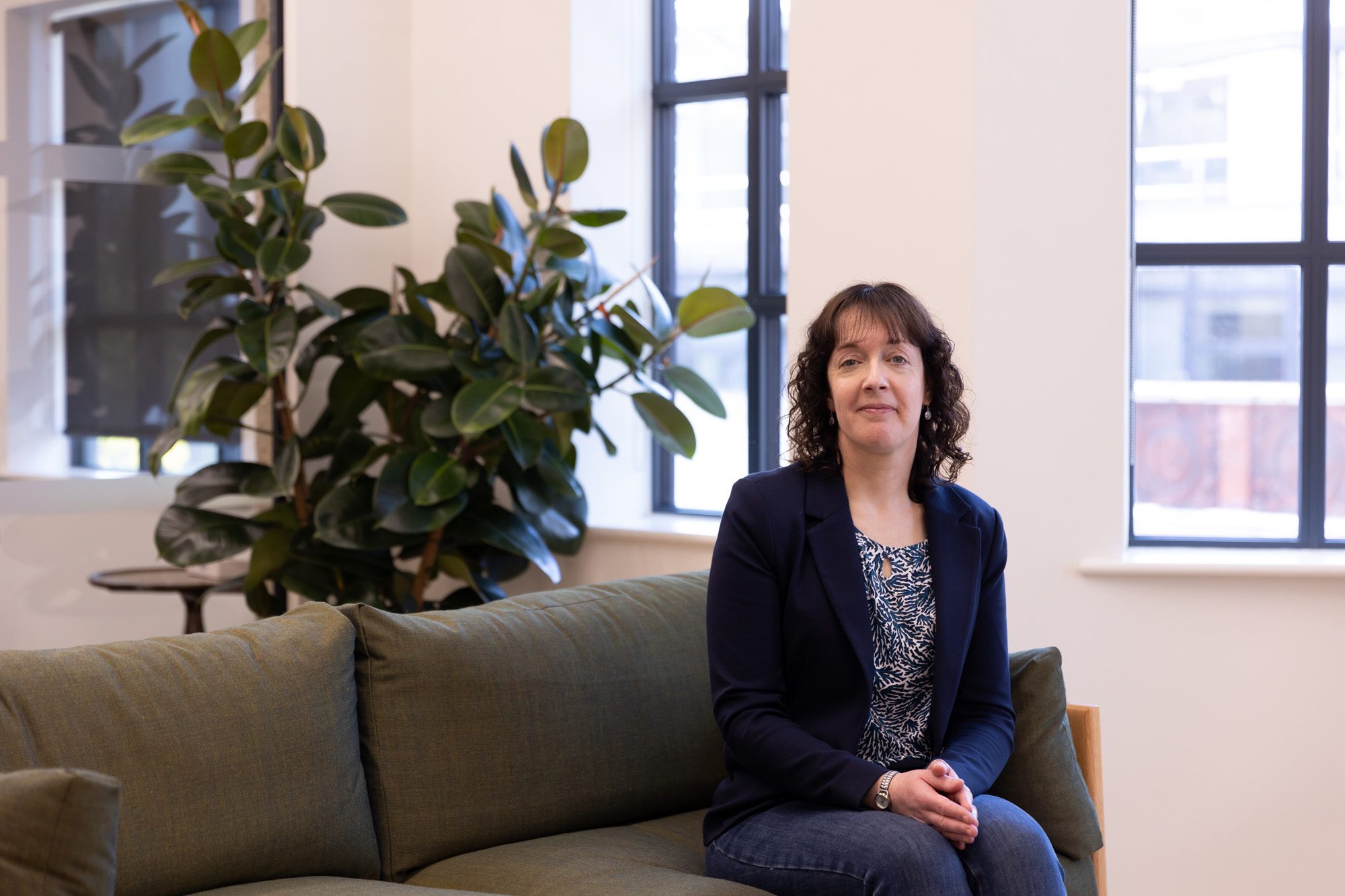
Dr Claire Fitzpatrick, Senior Lecturer in Criminology at Lancaster University
Why does this research matter?

This work prioritises voices of women and girls that are seldom heard, and illuminates the experiences of people whose lives we rarely hear about. It also highlights the immense challenges facing practitioners working in often disjointed systems. Most powerfully of all, by focusing on those with care-experience across the life course, it shows that although undoubtedly there has been some progress in the sense of greater awareness, far too much remains the same. There are too many imprisoned women whose memories of painful lives in care remain as close as ever because nobody has taken the time to listen. For some of these women, their own children are now in care. A life-course perspective is necessary if we are to fully understand intergenerational harm over time but rarely do we make those connections between past, present and future.

What motivates your research interests?

I am interested in preventing the unnecessary criminalisation of children in care, gendered pathways between care and custody, and injustice  where our systems of welfare, education and punishment intersect. I am motivated by challenging injustice and inspired by listening to, and learning from, the voices of those with lived experience of our various state systems in order to make change. My own experience of being in foster care as a teenager made me very aware that the pathways we take through life are so dependent on the wider support we get, and any one of us can easily be deflected from those pathways in both positive and negative ways.

I am motivated by challenging injustice and inspired by listening to, and learning from, the voices of those with lived experience of our various state systems in order to make change
What’s the one thing you would change within youth justice/the care system if you had the power and resources?

Can I have three?! I’d raise the minimum age of criminal responsibility to reduce the scope of the youth justice system, wipe minor childhood criminal records to prevent their potentially life-long impact, and I would reinvest the funds saved into our scandalously under-resourced care system.

What’s your experience of being funded by the Nuffield Foundation?

It has been an absolute privilege to be funded by the Nuffield Foundation and my experience has been that they are a very engaged and supportive funder. Being funded to do this work has also given me the opportunity to work with a fantastic team (Katie Hunter, Julie Shaw and Jo Staines) and our project has very much been a team effort.

What are you most proud of having achieved in your career or professional life to date, and why?

Completing this project definitely rates highly here. Leading the project during a pandemic, whilst home-schooling and dealing with covid was tough, but I am incredibly proud of what our team achieved during challenging times. Aside from that, seeing some of our participants in prison quoted directly in a recent government report was also a highlight. This might not sound much, but we meant it when we told our participants that we wanted to help amplify their voices and experiences, and it is great to see some of that happening in practice. The challenge now is to ensure that this leads to actual change on the ground.

Project Resources:

Links to the Care-Custody final report, executive summary and policy briefing can be found here.

Two team-authored open access articles are available below.

Painful Lives: Understanding Self-Harm Amongst Care-Experienced Women in Prison

A Difficult Balance: Challenges and Possibilities for Local Protocols to Reduce Unnecessary Criminalisation of Children in Care and Care Leavers

The Nuffield Foundation is an independent funder. The views expressed by Nuffield-funded grant holders are not necessarily those of the Foundation itself.

Read the project findings


By Nuffield Foundation

Explore our projects

Over-the-shoulder shot of a female secondary school teacher having a one-to-one conversation with a male teenage student. They are both sitting down and she is maintaining eye contact as she is talking. The teacher is smiling and sharing a positive interaction with the student.
In progress

Education | 2026 - 2028

The impacts of Relational and Restorative Practice in school

View project
Directional signs to the courts in Norwich on the brick wall of a house
In progress

Justice | 2026 - 2027

Exploring the intersections between the criminal and civil courts

View project
New

Justice | 2026 - 2027

Access to justice in legal challenges to infrastructure projects

View project
In progress

Justice | 2026 - 2026

Mapping evidence on justice wellbeing impacts after child sexual abuse

View project
Teenage boy looking out of window
In progress

Justice | 2026 - 2028

Permanently Progressing Phase 3: Adolescence and early adulthood

View project
In progress

Justice | 2026 - 2028

Exploring the child arrangements of separated families

View project
IFS Deaton Review of Inequalities
In progress

Justice | 2026 - 2027

Diverse disabilities: Accessibility and justice in the tribunal

View project
inequalities in child welfare intervention rates
In progress

Justice | 2025 - 2027

Building Resilience: The feasibility of adapting a child-focused intervention for parental separation 

View project
In progress

Justice | 2025 - 2026

Public law litigation in the automated state

View project
In progress

Justice | 2025 - 2026

Understanding and developing user-focused tribunal hearings

View project
In progress

Justice | 2025 - 2027

Developing a mixed funding model for free legal advice

View project
Rear View Of Girl Holding Ropes At Playground. She is wearing a coat and the sky is grey.
In progress

Justice | 2025 - 2027

 ‘The forgotten 10%’: private family law cases involving non-parents

View project
New

Justice | 2026 - 2027

Access to justice in legal challenges to infrastructure projects

View project
Teenage boy looking out of window
In progress

Justice | 2026 - 2028

Permanently Progressing Phase 3: Adolescence and early adulthood

View project
In progress

Justice | 2026 - 2026

Mapping evidence on justice wellbeing impacts after child sexual abuse

View project
IFS Deaton Review of Inequalities
In progress

Justice | 2026 - 2027

Diverse disabilities: Accessibility and justice in the tribunal

View project
Directional signs to the courts in Norwich on the brick wall of a house
In progress

Justice | 2026 - 2027

Exploring the intersections between the criminal and civil courts

View project
Over-the-shoulder shot of a female secondary school teacher having a one-to-one conversation with a male teenage student. They are both sitting down and she is maintaining eye contact as she is talking. The teacher is smiling and sharing a positive interaction with the student.
In progress

Education | 2026 - 2028

The impacts of Relational and Restorative Practice in school

View project
inequalities in child welfare intervention rates
In progress

Justice | 2025 - 2027

Building Resilience: The feasibility of adapting a child-focused intervention for parental separation 

View project
In progress

Justice | 2026 - 2028

Exploring the child arrangements of separated families

View project
In progress

Justice | 2025 - 2026

Public law litigation in the automated state

View project
In progress

Justice | 2025 - 2027

Developing a mixed funding model for free legal advice

View project
Young well dressed businesswoman working on a computer at the office
Reported

Justice | 2024 - 2025

Developing a digital legal knowledge hub for social welfare law

View project
In progress

Justice | 2025 - 2026

Understanding and developing user-focused tribunal hearings

View project
New

Justice | 2026 - 2027

Access to justice in legal challenges to infrastructure projects

View project
Teenage boy looking out of window
In progress

Justice | 2026 - 2028

Permanently Progressing Phase 3: Adolescence and early adulthood

View project
In progress

Justice | 2026 - 2026

Mapping evidence on justice wellbeing impacts after child sexual abuse

View project
IFS Deaton Review of Inequalities
In progress

Justice | 2026 - 2027

Diverse disabilities: Accessibility and justice in the tribunal

View project
Directional signs to the courts in Norwich on the brick wall of a house
In progress

Justice | 2026 - 2027

Exploring the intersections between the criminal and civil courts

View project
Over-the-shoulder shot of a female secondary school teacher having a one-to-one conversation with a male teenage student. They are both sitting down and she is maintaining eye contact as she is talking. The teacher is smiling and sharing a positive interaction with the student.
In progress

Education | 2026 - 2028

The impacts of Relational and Restorative Practice in school

View project
inequalities in child welfare intervention rates
In progress

Justice | 2025 - 2027

Building Resilience: The feasibility of adapting a child-focused intervention for parental separation 

View project
In progress

Justice | 2026 - 2028

Exploring the child arrangements of separated families

View project
In progress

Justice | 2025 - 2026

Public law litigation in the automated state

View project
In progress

Justice | 2025 - 2027

Developing a mixed funding model for free legal advice

View project
In progress

Justice | 2025 - 2026

Understanding and developing user-focused tribunal hearings

View project
Rear View Of Girl Holding Ropes At Playground. She is wearing a coat and the sky is grey.
In progress

Justice | 2025 - 2027

 ‘The forgotten 10%’: private family law cases involving non-parents

View project
Young well dressed businesswoman working on a computer at the office
Reported

Justice | 2024 - 2025

Developing a digital legal knowledge hub for social welfare law

View project
Reported

Justice | 2024 - 2025

Immigration detention and the rule of law

View project
Reported

Justice | 2024 - 2025

Crossing boundaries: Co-designing support for vulnerable young people

View project
Reported

Justice | 2019 - 2023

Born into care: best practice guidelines

View project
Reported

Justice | 2022 - 2024

Transparency and judicial review: a study of the duty of candour

View project
A teenage boy outdoors
Reported

Justice | 2022 - 2024

Child First: examining children’s collaboration in the Youth Justice System

View project
Two children walk ahead of two adults, one pushing a pram
Reported

Justice | 2022 - 2024

Voluntary care plans for children in Scotland: using Section 25 orders

View project
An older couple using a tablet to make a video call: Understanding local legal needs and supporting early intervention
Reported

Justice | 2022 - 2025

Understanding local legal needs and supporting early intervention

View project
A woman helping a little girl get ready for school
Reported

Justice | Welfare | 2022 - 2024

Race, religion and representation among care-experienced children

View project
A parent or carer holds a small child
Reported

Justice | 2020 - 2023

Discharge of care orders: a national study

View project
A little girl smiles at her father
Reported

Justice | 2021 - 2024

Substituted parenting: what does this mean in the family court?

View project
Mapping the changing face of cross-examination in criminal trials: a witness in court
Reported

Justice | 2020 - 2024

Mapping the changing face of cross-examination in criminal trials

View project
Search projects

We improve people’s lives by funding research that informs social policy, primarily in Education, Welfare and Justice. We also fund student programmes that give young people skills and confidence in science and research.

We offer our grant-holders the freedom to frame questions and enable new thinking. Our research must stand up to rigorous academic scrutiny, but we understand that to be successful in effecting change, it also needs to be relevant to people’s experience.

Profile